

0·
4 days agoI call it cyberslop and it’s 99% of cybersecurity “news” nowadays. Just fearmongering of solved issues to advertise a product/service by the blog writer/hister/publisher.
I call it cyberslop and it’s 99% of cybersecurity “news” nowadays. Just fearmongering of solved issues to advertise a product/service by the blog writer/hister/publisher.

One workaround is that you could use the trash-cli command, which moves files to the trash directory instead of truly deleting them.
But this only works on (usually desktop) systems that have a trash. And usually trash is set to autodelete items when it grows too big. I also am not sure if it’s always preinstalled.
But it would be a neat workaround for worrying about permanently deleting files.

Edit: no, it doesn’t. Looking at the comments below, it’s public key crypto.
Original comment:
The problem is that if that is your threat model, then the VPS provider, ISP, and literally everything between you and letsencrypt can pull a conpromised key fro letsencrypt.
This actually happened btw, an xmpp server was attacked this way, they compromised not the server itself, but the VPS provider MITMed their traffic: https://www.devever.net/~hl/xmpp-incident
If your threat model involves this, then the only solution is Tor, which eliminates these requirements of trust.
No, the license is not a real OSS license.
The short version is that the requirement of all infrastructure being open, could potentially apply to parts of the stack where you don’t have access to the source code, like the management engine or network card firmware.
It hasn’t been tested in court yet, and because this is unclear, the SSPL is a hot potato nobody wants to touch or test. The possibility of the requirement for closed source firmware to be open, makes the SSPL effectively unusable.
The SSPL is neither Open Source Initiative nor Free Software Foundation approved: https://en.wikipedia.org/wiki/Server_Side_Public_License
Currently, SSPL licensed code is best treated as source available, but proprietary code.
Mongodb is proprietary.
Postgres is open source, and then there is documentdb which adds a mongodb compatible layer on top.
But it would probably be better just to use postgres + jsonb directly for that case.
It was around last year.
Fresh firefox profile, US. Worked fine.
Maybe it doesn’t work if I try it again.
I’ve created gmail without a phone number. It seems to still be possible.

There are organizations that audit software for free, for smaller developers.
But they only do so if it is FOSS.
You have now essentially killed your project, since you will not be able to afford an audit, and nobody who knows what they are doing will look at an encryption protocol or app that hasn’t been audited.
EDIT no wait, this post is about secure, not hosting/tunneling in general. This comment is off topic ig.
I would like to avoid paying for a VPS
Oracle cloud free tier, but it does have a history of randomly killing the VPS’s created.
Public ipv4 addresses are scarce, and becoming more expensive now. You are probably going to have to shell out some cash if you don’t already get one as part of your internet plan.

Step 1 is communication.
Talk to your english teacher. Explain to them, why Google Docs, the way they track history and changes, is not a preferred option for you, due to ethical or privacy considerations.
Explain to them your selected technical alternatives for tracking changes. A few alternatives are (many commenters already covered):
Secondly, you need to remember that what your english teacher wants is not “document history”, but instead seeing your process (maybe to prove you didn’t chatgpt it, in which case, writing it on paper also might prove that). If none of those technical alternatives are viable solutions for them, another alternative is to simply submit documents that encapsulate each stage of the process. For example, a common pattern that my teachers and professors would do for writing assignments is:
The above setup is nice, because it is not tied to any particular software, and can even be executed on paper. This would mean that future students, similar to you, going through the same class, could write essays with their preferred writing software, instead of only with google docs or whatever solution you get the teacher to learn how to work with (assuming they are nontechnical and teaching the teacher is difficult.
I only started seeing it done like this in college classes. High school classes only sometimes required an outline, and never required an annotated bibliography. It also is more work then just writing an essay from sources.
But the two big benefits of this setup are:
Good Luck!
The current thing I was working on was figuring out if I can do this: https://github.com/NilsIrl/dockerc . This project, compiles a docker image, and runtime to a single container. The interesting thing I find about it, is that it brings the docker container runtime and sandbox along. If I replace a user’s login shell with it, the user is now placed inside a sandboxed environment and can’t do anything.
My usecase is I want to replace people’s login shells with a container in a defensive cybersecurity competition. But, containers are not a sandbox, and full network access, and so on.
So my improvement, was to:
I am having trouble meeting all of these requirements, so I suspect one or a few will go, or I will have multiple versions of the project with tradeoffs.
All of my projects, often involve doing something standard, but with extra constraints, or some kind of “twist”. Like a very common thing I find myself doing, is to do something normal, but then rip out one of the underlying components of the system, replacing it with something else.
I’ve found that I’ve learned a lot about how these systems work, without having to spend time building them entirely from scratch. You learn way more about Linux by reconfiguring your init system to enable encryption, than copy pasting from the Arch Linux Installation Guide the whole time, doing the standard setup. And then ignoring the partition layout so that my kernels are restored by BTRFS snapshots, which is not the default configuration.
That’s the way to break out of tutorial hell. You have to not follow the tutorial. You can still follow them most of the way, but you have to pick a few steps, and do something different. I pick something that I think will benefit or make my setup better in some way.
It is kind of difficult, since I feel like Linux has gotten more popular, and people know write more blog posts, and something that was previously a cool twist, is now something I can find a tutorial for. But with some care, you can ensure you still are learning, and it’s made easier by picking projects with twists.
Skill issue. I have to constantly convince the models that what I want to do is in fact possible, and that the “alternate paths” they give are things I already considered but discarded because of various reasons.
It’s gotten to the point where I would ask them to search for blogs directly, but they still try to give me hallucinated slop that isn’t actually what I want instead of following my instructions of being a search engine that filters out all the SEO slopspam that’s so prevalent nowadays.
I currently am doing:
https://marginalia-search.com/
To find blogs directly.
Although I do almost exclusively Linux/Kubernetes stuff, and very little programming atm, that might be why I have a different experience.
Back when chatgpt wasn’t as broad (and people hadn’t posted blogs on as many things) I used to assign students things that chatgpt would find impossible do solve, and I got great glee from watching them spend a day trying to get chatgpt to do it entirely for them, before they gave up and had to actually learn. They can learn from chatgpt ofc, idrc, but it wouldn’t be able to do ut for them.
Nowadays, things like “set up nextcloud with caddy instead of apache” have 10 thousand (real, non hallucinated) blogposts about them, which have been fed into chatgpt so it can do that without much difficulty.
It is getting harder to find things that beginners can do that chatgpt can’t, but as soon as you move beyond the level of advanced beginner (also called being stuck in tutorial hell) in linux, you quickly find the LLM can’t do everything for you.
Account with no comments = suspicious af
What reverse proxy are you using?
Tailscale works great, but their free tier is limited to a total of 8 users, which is enough for a tiny minecraft server, but doesn’t seem to be enough for your usecase.
For 10-15+ users, you probably want to self host a VPN on your own VPS. Like, you can self host headscale, which is tailscale but self hosted. : https://github.com/juanfont/headscale [1]
I wouldn’t port forward game servers, because they often lack authentication (login and stuff), and then they also have security issues due to not receiving updates. If your game server isn’t truly public, then it’s easier to just have people use the tailscale client to connect to your VPN.
[1] Although I would recommend headscale to OP for it’s simplicity, it is very barebones, and software like netbird or netmaker is more close to a truly self hosted tailscale, with things like more advanced accounts, OIDC integration, authorization, and so on. But they are more annoying to host and set up.

No, firefox doesn’t implement the webusb standard which they probably want.
https://developer.mozilla.org/en-US/docs/Web/API/WebUSB_API
The problem here is not browser support, but them not shipping a native application or library (which I would want to be open source).
Do nix and then use nix2appimage, or nix bundle to package the app compressed as an arx archive without the startup times they complain about.
You can also use https://github.com/DavHau/nix-portable to bundle it a bit better, without needing nix on the host.
And then, based off a quick search:
https://github.com/neobrain/nix2flatpak
https://github.com/barstoolbluz/nix2deb
I couldn’t find nix2rpm or nix2pacman, but there exist tools to convert between formats (alien, debtap, rpmtap, and one more who’s name I can’t remember but I remeber as being the most versatile).
What I’m trying to say, is that when people said “just use nix”, they probably really mean to use nix as a platform to build other packages withouth doing extra work.
On the other hand,
You can also use one of the newfangled appimage like formats: https://docs.pkgforge.dev/formats/packages
This one is linked in there and creates a static executable from any binary: https://github.com/VHSgunzo/sharun
Now they would still have to build for macos and windows, but they are already doing that anyways.
As a sidenote, there is also this: https://github.com/pacur/pacur , which is an aur like repo that buids debs, rpm’s, and pacman packages. So there’s semi-automatic updates, via a publuc repo you can out stuff on.
The real elite solution, imo, is to host forgejo, or use codeberg, which insanely has a package registry for every possible format of packages. So you can directly just push there, after building however you want.
But if developer’s were good at packaging, I wouldn’t be so mad when they try to do it.
Because this:
The next version will include a new built-in self-updating mechanism
Downloading unsigned, unverified binaries directly from the latest versioned github release?
Makes it so that all that’s needed for getting malware on the system is pwning the developers account via some supply chain malware, that hooks into there browser and pushes a release.
And every additional developer who can release, or every github actions that is potentially vulnerable but can be made to release, or claude (since the author is letting it commit, which requires it to run without sandboxing afaik) becomes more attack surface.
There are ways to fix this. Conventional distros use multi party signing of commits and releases, where developers continously verify eachother and look over changes.
More newfangled flows involve using github actions to build immutable releases, directly from tagged versions of the code.
But random developer #3989 isn’t doing this. They are distributing their software in a way that malware distributors will be ery happy to see after pwning their account.
I want devs to use nix, because then I can build or run their program directly from the source code. It sidesteps so many issues with visibility of the supply chain, or being unable to inspect what I am running.
I like nix becuase I can make developers like the above satisfied by giving them a way to easily build static binaries, or other formats.
Nix is also packaged in debian as nix-bin.











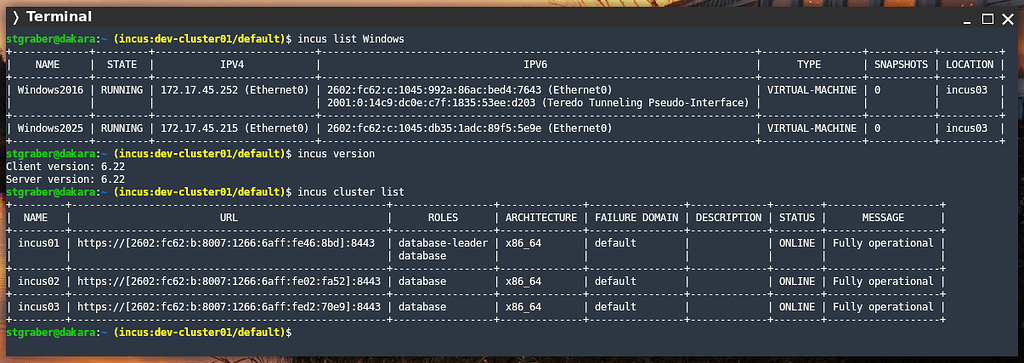



Yeah, that’s a nono from me. That’s a big security red flag.
Secondly, if goes against the stated goal of having testers find bugs. Part of finding bugs is being able to go through the code and figure out what issues are happening, in what parts of the code.
Finally, this project appears vibecoded. Here is the initial commit: https://github.com/adityakrishnan005-a11y/ScreenGuard/commit/c97cc2e6bd17b35e99ff0bb892aeed41f95cb4e0
That’s a lot of code in the initial commit. And emojis in the .md’s…
There are also some other bad patterns like binaries in the git repo :/
I can see why this project received mixed review on it’s previous pass. Please:
It’s a cool project, sure.
But what makes this project better than something I could vibecode? What makes this project better than the previously existing https://github.com/polesapart/timekpr-next , or other time keeper/time control projects? Can you guarantee that this project will stay maintained, which is a common issue with vibecoded projects.