Even with android custom ROMs like Lineage, support eventually ends. Meanwhile, you can just slap on linux onto any old computer and its still getting the latest updates. 🤔
Why not just do the same thing with phones? Forever phone updates? 👀
This is changing. Microsoft is trying to restrict Windows 10 -> uploads based on having a user-hostile TPM module to make PCs more locked down, just like phones.
I don’t think this is going to change the overall situation, it’s just a single point new system requirement, like the plausible GPU was for Vista.
Now, if they start expiring the old TPMs every few years, and Windows 12 needs a TPM 4.0 or something, then this will change the overall situation. At least on the Windows side.
The fact that perfectly capable PCs aren’t getting security updates is just part of it. Once Microsoft and other corporations can ensure that your computer is no longer completely controlled by the user (as the TPM ensures) they can start locking it down, first in the name of security, but then just like how some phones have apps that you can’t uninstall, or how printers force you to use name brand ink at a huge markup.
Yeah, a TPM is, essentially, a piece of bondage gear. It’s shackles put on you to try and convince someone else of what you can’t do. It has niche applications but it’s not a valid thing to require of the general population.
Have you got some sort of Bill Gates bondage kink?
user-hostile TPM module
I mean, the module itself is fine. Some linux distros can also take advantage of that with full disk encryption, instead of putting keys in the ram, store in in TPM which make it harder for keys to get extracted if it gets stole while on.
But of course microsoft is gonna try to use it nefariously for some DRM stuff.
It would be fine if we lived in a utopia, but not fine when corporations have the power to require that you use one, or else you can’t use their services.
So far the only companies making you use one are the multiplayer gaming companies that are using TPMs for hardware IDs to ban cheaters and expensive corporate software using them for remote attestation on hardware the company owns.
If you’re salty about the whole Windows 10 thing, you’ve got until at least October 2027 until Microsoft drops support for it (security beyond the 10 year window announced at the launch of Windows 10 cost like 5 bucks a month though) or you can install an OS from someone who’s still willing to maintain support for old hardware, like Google’s ChromeOS or maybe Linux.
It’s only really a problem if you’re unwilling to pay for (or pirate) updates and are afraid to separate yourself from the large corporations building your current OS.
Wasn’t microsoft the only phone manufacturer to ship a standard uefi on their devices? I mean before they eventually scraped what was left off of nokia.
Because they are incentivizing us to buy new phones. It’s not a technical reason it’s a capitalism reason.
Wasn’t one of the phone companies found to be purposely slowing down older phones with each new update
Apple aggressively throttled CPUs when new models came out.
They claimed it was due to age of batteries and to prevent overheating. But then Samsungs started exploding and I think people just let it go.
Not sure if they still do it or not.
Not so much overheating as dropout. Batteries lose both energy capacity and power capacity over time. If you draw too much current from an older battery, its voltage will drop significantly and possibly prematurely shut down the phone.
Lowering peak current (by slowing down the phone), can prevent your phone from shutting off while it still has like 20% capacity left.
Considering Apple was doing battery replacements for like $60 (before bumping to $100), and this was a setting that could be turned off, I think the only real crime was enabling it by default and not properly informing users.
Everyone dunks on Apple for throttling older batteries but the fact is this was super pro-consumer move. It prevents the phone from randomly powering off because the SOC tries to pull a burst of energy that the battery is too tired to output, and resets following a battery replacement, plus nobody notices the throttling except under synthetic benchmarks where you actually have performance numbers to see the handful of percentage points of performance difference. AND after this kerfuffle they added a toggle switch where if you so prefer random instability on an aging battery over 2% slower turbo performance you can choose to have that.
the exploding has nothing to do with this throttling tho.
That was Apple
“Battery degradation”
I mean… that’s a true thing that happens and must be compensated for unless you want your phone to randomly die at 20%. Android phones do it, too. I’d rather my phone slow down at 10% than have it just cut out and die.
It wasn’t slowing down the phones at different battery percentages, they were essentially derating the hardware under the premise of battery management, and iirc they got called out and said “you’re right, but buy new phones anyway, yours are old.” I don’t recall the specifics, but it just seemed super shady.
and now people , some of thema re. realizing the current iteration of phones, iphones, samsungs are really no different from the last few generations.
With that username, I trust this answer completely.
deleted by creator
I mean, I guess my question is: “Why don’t they pull the same shit on computers then?”
Windows11 is trying to do just that; having a minimum spec chip, so they could eventually drop support for a lot of older hardware. But PCs are so modular that you can pretty much add any hardware together and the OS (such as Linux) can figure out the packages you need to make it all run…but even Linux has dropped a lot of 32bit support in the last few years. So it happens, just at a much longer time frame
even Linux has dropped a lot of 32bit support in the last few years
And that’s just because no developer uses those systems anymore actively. If you really want to, you can pick up from where they left and bring the support back. But as 32bit x86 CPUs haven’t been produced in the last 20 years (give or take a few years) there’s just not that many working systems around anymore.
Yeah, no point supporting something that has become obsolete. Foss community often puts effort in as passion, but a business will not want technical debt and move on to the next hardware support
They’re trying to, but market adoption has said so far that we’re unwilling to tolerate it.
Because IBM built the PC as a side project out of mainly off-the-shelf parts, except for the BIOS, never intending it to be more than one of many personal computers in the market… and then Compaq and Columbia Data Products reverse engineered said BIOS making PC-compatible clones a possibility.
Open BIOSes and a personal computer made of essentially off-the-shelf parts led to everyone and their aunt making PC-compatible machines, and the personal computer boom, and most personal computers being able to run mostly the same software.
IBM tried to lock it back down with the PS/2, and Microsoft also later tried to lock it down to Windows with some shady schemes like ACPI, but all attempts ultimately failed because by that point the PC ecosystem was so large that any attempts at lockdown were sidestepped by other vendors, or eventually reverse engineered or bypassed.
Sadly the same never happened with phones. The PC thing was a serendipitous fluke to start with, phones aren’t made of off-the-shelf parts, and manufacturers were wise to the “risk” and made sure to keep as much control as possible.
Microsoft makes money supporting their OS on older hardware for businesses. That has gone on long enough they have to continue, and they might as well share it with everyone else.
Windows is designed to work on a very wide range of specs, so older devices as well as low-end newer devices should be able to run it.
That’s even more true about Linux. Many popular distros can be run on a raspberry pi, a 20 year old MacBook, or a state-of-the-art gaming desktop.
It’s less true about macOS because Apple has more control over the hardware so they can be pickier. Mobile developers also have more control over the hardware and can be pickier, although that’s less true about Android than iPhone.
in the case of Android, it comes down to the proprietary driver modules that are compiled for certain kernel versions. As newer versions of android are released with newer kernels, the closed source modules fall out of step. If the drivers for these components were open source anyone could recompile them for any Linux kernel. It’s usually up to the device manufacturer working with the likes of the chip makers to release newer module versions for their hardware. OEMs dont want to support their hardware beyond few years, so you’ll hopefully buy a new phone.
The postmarketOS community (and some of the android community) works pretty hard trying to bring mainline kernel support to devices, which enables them to run generic Linux kernels, or conceivably newer versions of android than the OEM has released. But this involves reverse engineering support for this hardware.
We need some regulation that makes driver APIs and a linkable compiled version of drivers mandatory to be available upon request.
The APIs are part of the Linux Kernel, so you’d be forcing the Kernel to completely change their development policy of internal breakages being allowed. That’s a no-go.
Not necessarily. The drivers in the kernel are already released and free to use and can be linked to as long as the software linking it retains the GNU license or can claim that it’s a separate service (such as an API or separately installed service) or it has to be installed afterwards like proprietary nvidia drivers.
Either way the source code is released and if the drivers want to retain the proprietary license they the community can make a way to download and compile the driver for the current OS after install. This will save a ridiculous amount of dev time and make Linux phone OS development much easier.
There’s really no way to do this without making the whole driver source-available, as there’s no way to update it to a new Kernel without full source access. That’d be great, but the manufacturers will fight tooth-and-nail against that, especially since the drivers can contain trade secrets.
Simple. We let them get away with it. Compare:
“Your PC is out of date” “Don’t be stupid, it’s only 2 years old and still works fine” with
“Your phone is out of date” “OK I’ll buy a new one”.
There needs to be a lot more of Answer A to Statement B.
The stupidity with phones gets even worse when you consider the hardware in them and how little of it people really use… Androids are literally pocket-sized laptops.
Install Tasker and you’ve got a pretty serious workhorse.
Install Termux and it’s next level. Especially if you use proot to install a full Linux environment.
No parts standardization, replacements, or compatability.
Short lifespan batteries.
Very small chipsets/components have capabilities increase via tech advancement at a faster rate than larger boards.
Actually very similar to larger apple products as well.
Part of this is because the device has to connect to cellphone towers where the radio equipment is on its own lifecycle path and eventually replaced.
Eventually the feature set of a device is too outdated for the carrier’s network to syooort it.
Developer time is limited and so there is little to no value using that time to support very old hardware that would be WiFi only.
PC = General Purpose
Mobile devices = Purpose builtolder electronics, were designed to last 5-10+years, companies realized they wernt getting any more profit, so they had planned obselescene into every electronic device. every 2 years. microwaves built pre-2000 would last 20-30+years, and with more efficiency, while more modern ones are prone to catch on fire or break down after a certain amount of uses.
I mean planned obsolescence is absolutely a thing, but
modern [microwaves] are prone to catch on fire
is a wild take that you better support with some kind of proof. Otherwise it just makes the rest of your (IMO valid) argument look bad.
microwaves […] more modern ones are prone to catch on fire
🧐 Got a link?
Computers have systems (BIOS, EFI, ACPI) that give the people who make the machine responsibility for providing a standard, publicly-defined way for the OS to enumerate the hardware, and to use the hardware in a basic way even if the OS has never heard of it. Linux can get a kernel panic on the screen even if it has no idea what your GPU is, because EFI understands it and Linux understands EFI. It is set up this way partly because there’s a real possibility of hardware being added or removed, partly because people routinely mix and match parts, and partly because IBM mistakenly designed a good system that was easy to work in and not one that kept them in business.
Phones (and phone-derived systems like the Raspberry Pi and other single-board computers) don’t implement a standard. The hardware and its boot process assumes tight integration between the hardware and the software, usually to the point where the bootloader refuses to load anything not signed by the device manufacturer, unless it is satisfied that it has been given that manufacturer’s permission to be unlocked. (Computer secure boot implementations generally trust, for example, Microsoft, as well as the machine owner, who can load their own keys.)
Instead of the CPU developers releasing example EFI implementations, they release forks of the Linux kernel that they maintain as long as that chip is the latest chip they sell, and then fork off the mainline kernel again for their next chip. And the device makers ship devices by starting with the chip maker’s kernel, customizing it for the device, giving it a “device tree” that tells it everything that is supposed to be in that particular device, and shipping it. For a few years they port patches from the current kernel onto this forked kernel, and then they stop. With no standard to develop software against, and no documentation for what’s in a device and how to use it like there is for the standard’s interfaces, the only practical way to run software on a device is to start with that patched kernel.
Mainline Linux refuses to adopt and maintain the chip and device makers’ low-quality, chip-and-board-specific kernel changes (often because they break the kernel for other uses), so you can’t generally use a mainline Linux kernel instead. If you tried to tease out and improve the device-specific patches to the point where mainline Linux would take them, the device would be hopelessly outdated by the time you were done and you would have dozens of job offers to occupy your time as a highly skilled embedded Linux developer. The work is not practical given the tiny number of people who would benefit from it for a particular device, and how little it pays off compared to just buying a new device with a more up to date forked kernel available.
“Maintaining” a device for LineageOS or other open software eventually collapses under the weight of mainline Linux’s changes and the necessary chip and device maker patches no longer being practically reconcileable.
Directly from my ass, it’s my assumption that the primary maintainers just don’t have an incentivize the cost of supporting older devices and the disparate hardware configurations.
Like, planned obscellesance or not, smartphone churn is going to happen anyways. People lose them, smash them, fall into a pool with them, decide they NEED the newer camera soldered into them, etc…
It’s not like there are old phones in a closet somewhere propping up business critical infrastructure like with computers.
The cost vs utility of maintaining forward features and security patches for a massive catalog of hardware configurations just isn’t there.
I think it has a bit to do with a lot of firmware or drivers being closed source too. I feel like a couple years ago I ran into that issue with camera my old Android phone had
x86 hardware interfaces are traditionally pretty well documented and standardized, going back to the original IBM PC in the 1970s(?), enabling among other things an aftermarket of plug-in expansion cards and other peripherals. That standardization also makes it possible to write device drivers and keep them working.
ARM stuff on the other hand is closed and changes all the time. So this year’s peripheral won’t work with last year’s phone. Mac stuff is also like that, maybe not quite as much most of the time.
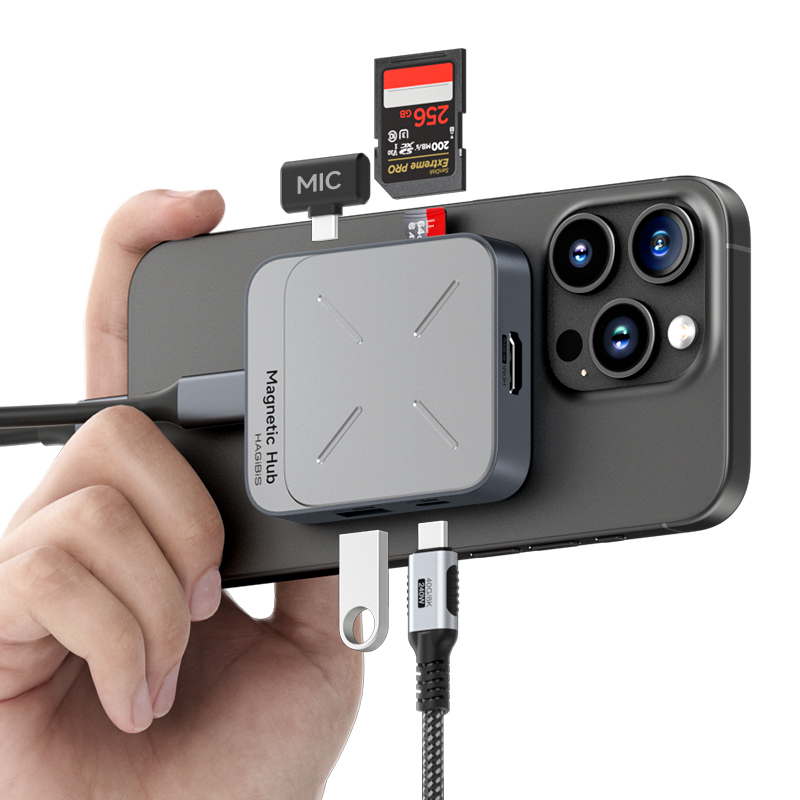
When I bought my phone 5 years ago, 128G of storage seemed limitless. Now it appears to be a tightening constraint. Should I be able to increase that storage, I wouldn’t even be thinking of a new phone. Sadly, Samsung removed storage expansion from their flagships.
Sadly, Samsung removed storage expansion from their flagships.
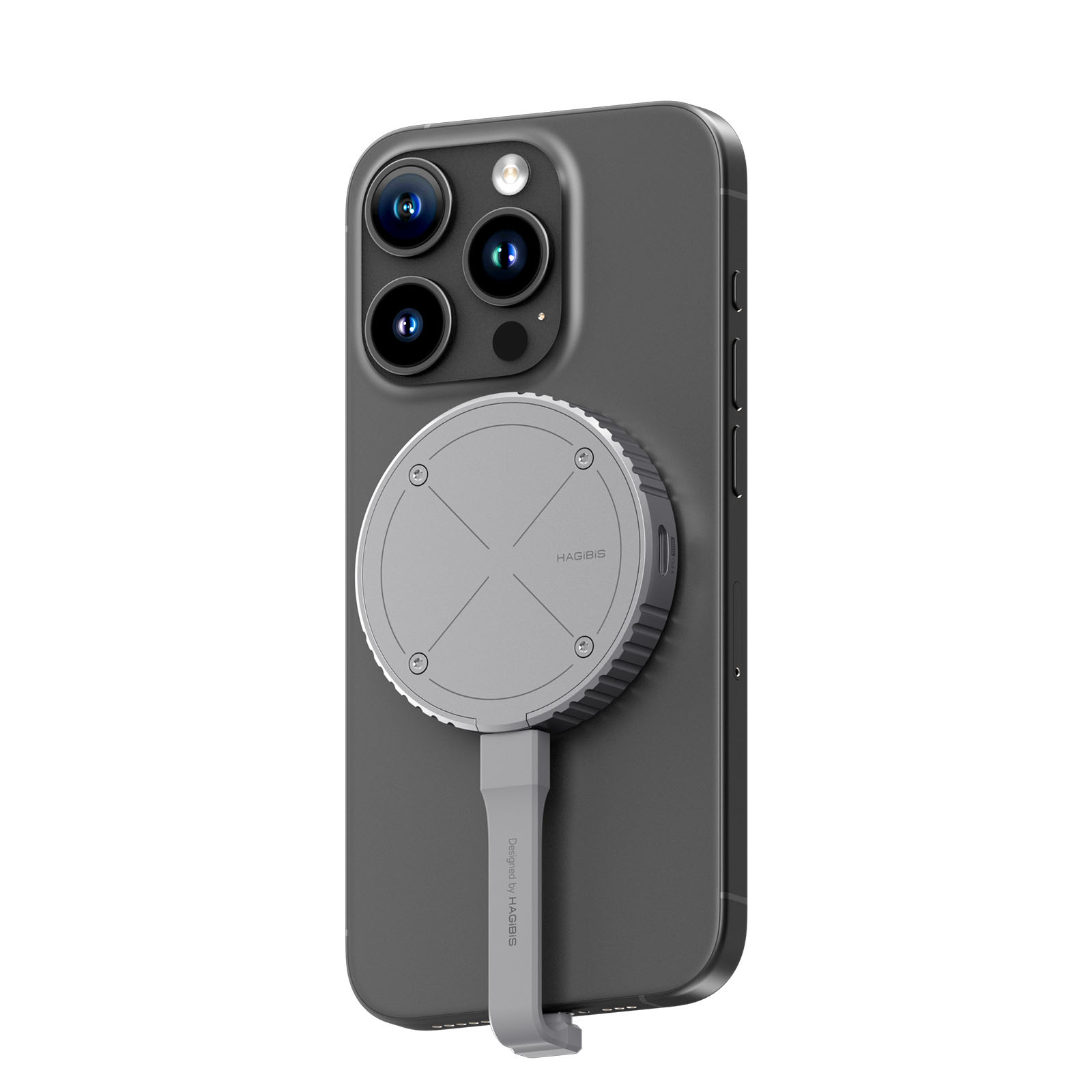
Behold!

(Not my image, I stole it from reddit)
This appears to be an iPhone, but you can do the same with any phone, just use double-sided tape xD
This is amazing, hahah
Lol that not a phone anymore, its a pocket-pc. 😁