When will they ever learn?
It’s fine.
More people for Linux!

they are constantly looking for reasons to turn people away from their products
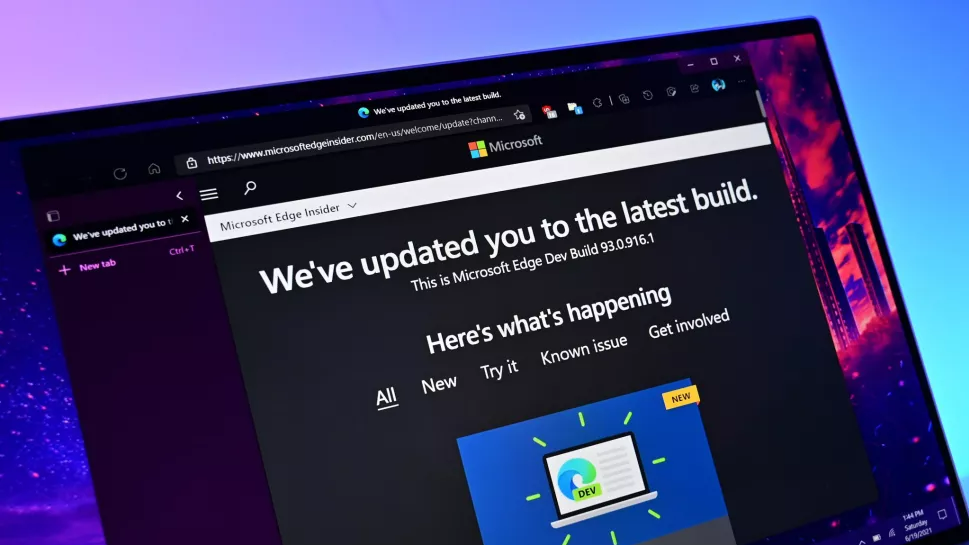
Like in the old days, you open windows, and an internet explorer pop‑up appears.
This post and its entire comment section are hilarious because the vast majority of people browse the internet on their phones, usually through Safari or Chrome.
What I find funny is that some people arrogantly and confidently turn their noses up at Windows users for not using Linux, yet they themselves are still using either an iPhone or an Android device
Android is Linux
Oh please, that’s such a lazy “gotcha.”
Yes, Android uses the Linux kernel. Congratulations, you’ve identified the lowest common denominator. That does not mean you’re “using Linux” in any meaningful sense of the word.
When people talk about using Linux, they’re talking about an actual Linux environment, full control, GNU userland, desktop distributions, package management, the whole ecosystem. Not a locked-down mobile OS where everything is sandboxed behind an app store and you interact with it through a touchscreen UI.
By your logic, using Android makes you a Linux power user, which is obviously absurd.
You’re technically correct in the most superficial way possible, but it completely misses the point I was making.
I don’t think you actually read what I wrote before responding. What does the kernel have to do with the point I’m making about Linux kernel, Linux, or Android?
Yes, Android uses the Linux kernel. That’s not the argument. The kernel by itself is not the operating system people are referring to when they say they “use Linux.”
Android is not a traditional Linux system, and more importantly, it is not some bastion of open-source purity. It is developed and controlled by Google, with most real-world functionality tied to its proprietary ecosystem.
So bringing up the kernel doesn’t actually address what I said.
You have it backwards. Linux is the kernel. That’s it. The distribution isn’t Linux. A distro includes the Linux kernel as well as extra user land applications. Anything that uses the Linux kernel is Linux. Android uses the Linux kernel, that makes it Linux. Yes, it’s a restricted and locked down version of Linux, but it’s still Linux.
No.
I will try and explain.
To use a simple analogy, the Linux kernel is like the engine of a car. A Linux distro is everything else around that engine. You can take the same engine and place it into many different shells. While the engine remains the same, the surrounding components can vary wildly.
That’s why there are dozens, if not hundreds, of different Linux distros.
A company like Google can take the Linux kernel and build an operating system like Android around it, resulting in the fragmented mess it is today.
However, saying that Android is Linux is an oversimplification. It is more accurate to say that Android is built on the Linux kernel, not that it is Linux in the same sense as a traditional GNU/Linux distribution.
The people that literally created Linux disagree with you. They all say that Linux is the kernel.
You can stop trying to explain your point of view. I understand exactly what you’re saying, it’s just incorrect. No amount of explaining is going to change that
I thought we settled this years ago
Its sometimes fun to watch this drama from the otherside. Windows is ‘that other OS’ for me now. I was switching between Linux and Windows a while ago, and made a permanant switch around 2021-ish (I think). I only use Windows at work as I don’t have a choice, and in certain instances where I’m forced to use a Windows device e.g. for online exams, etc…
That’s me too. Every time someone tells me that windows pulled off another shit move, all I can do is laugh at how they choose to deal with that and keep getting fucked.
If my school didn’t absolutely require windows I would be fully Linux at this point.
Honestly (and probably naïvely), what exactly is it that Windows can do that you couldn’t do on another OS? Why would a school need to force such a retarded requirement?
As someone who has been dealing with exactly this issue with my new employer’s enterprise ICT department, I have some insight to share.
When you have thousands and thousands of laptops that you need to manage, it becomes a burden for the in-house IT department, so they often farm it out to a Managed Service Provider (MSP). This is particularly common for organisations like schools and hospitals that often don’t even have an in-house IT department. The MSP will install policies and management software on the laptops to ensure the OS is up to date, the antivirus is not disabled, the VPN is configured correctly, passwords are changed regularly, etc.
Yes of course there are linux-native solutions for each of these things, but the MSP doesn’t support it, doesn’t offer that service. To keep their service prices affordable for enterprise organisations, MSPs usually hire the lowest cost technicians and support staff. These poor underpaid staff probably have never even heard of Linux. The MSP can increase their marketable value by advertising the certifications they’ve attained. The certifications are provided by Microsoft and are related to Microsoft software and systems.
If you have a small fleet of devices and an in-house IT team that has a bunch of Linux enthusiasts, and a user base who drives demand, then it is possible to support Linux. But it requires a lot of effort and dedication. My old employer did that. They had a fleet of around 5,500 devices (a mix of desktops and laptops), mostly Windows, approx 500 of them were macbooks, and about 50 were Linux. Some of these were users who needed to use software that is available only on Linux, some were like me who are simply more productive and efficient using a linux-based OS. But maintaining, administering and supporting those 50 Linux devices took around 20% of the time of the IT department. That’s massively disproportionate to the number of Linux users.
Not long after I left there, the new CTO put an end to that, they saw and easy cost saving by simply refusing to allow users to have any OS other than Windows.
https://github.com/winapps-org/winapps/
Winapps might be of help to you.
I do have a few other pet peewees too for Linux, despite having that on my ThinkPad.
- GDB is pretty uncomfortable to use.
- The only usable GDB GUI is a glorified webpage by none other, than Micro$lop.
- Some low-level API (sound, input, etc.) are absolutely dogshit compared to their Windows counterparts (still haven’t found anything on how to specify to ALSA if I want to open a device other that
default, and how exactly, just found a massive issue with Evdev, etc.). - Want something better than those? jUsT USe sDl, except SDL is kind of dogshit under Windows (DirectInput/XInput + DirectAudio instead of newer APIs), could not get its audio system working at all as people were instead suggesting me to use MP3 player DLLs instead of writing my own audio solutions, etc.
Bit specific, but for opening an audio device other than default, you should use the API of a sound server. Pulseaudio’s for instance. The new hotness is Pipewire, and it has its own API, but it also supports the Pulseaudio API and AFAWK most clients (apps and things) are still using that.
The sound server sits on top of ALSA and handles all the routing and mixing and shit. ALSA is lower level than what you need as an app/user program dev.
(Pipewire also supports the JACK API. Music apps and such used to use JACK because it was lower latency than Pulseaudio. Which meant you had to stop Pulse and start JACK and lose all sound from your other apps and it was a right pain. Pipewire just does both.)
– Frost
What a coincidence, I want to edge every time I open my computer.
Ye olde active desktop for you noobs
I dual boot Linux with windows 10 for more than 10 years now, networking from windows is just unacceptable for me, on Linux you can also add any games that you want, if Adobe wouldn’t keep resisting I would be totally free of Windows! They were always trash
At this point I’m starting to wonder if Microsoft is paying Adobe to not work on Linux. For most people I know, Adobe is the main reason for not switching.
Maybe you can try Adobe through CrossOver Linux’s demo and see if it works? They contribute lots of work towards Wine, but also sell a more ‘hacky’ commercial software that isn’t as strict about how it does stuff.
After switching to Linux, I will try out their software and decide whether to buy a lifetime license.
I ll check it out for sure, thanx!
I recommend FOSS alternatives to Adobe’s garbage. GIMP for a photoshop alternative. Krita for digital art. Inkscape for an Illustrator alternative. Ruffle for the Flash Player Standalone Client. So on and so forth.
Mypaint and Krita are favorite programs that I use daily, but still I can’t import those photoshop brushes I accumulated over the years in Krita, the last time I tried the program didn’t load anything.
Linux Mint is so awesome.
I have many linux distros running in the house for servers and self hosted software but the one box i havent swapped yet is my daily driver system. Microsoft is pushing me ever closer but with some titles still not supporting linux and getting to the end of a day i just want to game not debug something.
Its getting close though. Fuck this timeline. I looked at Pop OS and bazzite as out of the box gaming distros but am open to anything.
Want games are holding you back. Between lutris and steam’s proton compatibility I personally haven’t run across much.
All of EA’s new titles use Javelin anti-cheat. It uses a Windows kernel module, so it’s not possible to run with Wine/Proton.
Given that EA forces users to run what is effectively a rootkit just to play their games, I feel like the only good choice is to stop playing those games altogether. Or, at the very least, compartmentalize your gaming machine and the network it’s on.
It’s worth the switch. Bazzite Is a solid choice. I would stay away from PopOS for now. CachyOS is a great high performance choice, especially if you have Linux experience.
After not ever having set up a gaming focused distro, I gotta say, I was shocked at how seamless CachyOS makes it. Outside of creating the install media, installing CachyOS and getting everything set up to game takes like 10 minutes.
So i have ubuntu, mint, and pop os running currently. And unraid if that counts.
Could you toss out 3-5 solid distros that good for gaming compatibility or general use? I will look up cachy OS. Also id i may ask whats up with pop os? Drama in the distro?
Along with bazzite and cachyos, I will throw in Nobara which is fedora but gaming focused and supported by glorious egg roll.
Has been the distro I have had the most success with, even if I have had to go back to windows because of certain sim racing stuff being a bit rubbish on Linux(for now)
Thank you for the recommendation! I will add it to my list.
That’s great. Yet another reason to tell people when they ask me why I’m using Linux on my computers.
Every shitty new idea in Redmond will just generate more Linux users.
Well I want Microsoft to take a big step back and fuck their own face
Who downvoted this. The parent comment is correct.