- cross-posted to:
- privacy@lemmy.ml
- cross-posted to:
- privacy@lemmy.ml
You must log in or register to comment.
I’ve been testing it out, it’s pretty fucking rad.
Alright, read up on it a bit more. Sadly the language choices (C++ now, maybe Swift later) rubs me the wrong way for something that needs to be incredibly secure against attacks. I really really support additional browser engines, but likely not this one.
Thus I think Servo is a better choice for those looking to contribute. IMHO.
Quite happy to see Servo coming along again. I am still excited for Ladybird and it seems more likely to deliver a truly viable browser sooner.
I am not a Swift dev but I think it has decent memory safety as well. I think it is one of the reasons Ladybird is moving to it. They evaluated Rust and decided it lacked the OOP features they needed.
The C++ that Ladybird writes is also very good. They have their own standard library (written for SerenityOS) which is very modern including memory safety and security. Still C++ though of course.
I’ll be great. The big question is how long it’s left until a stable release
Ladybird says 2026. Given the current state and progress, I believe it may be quite usable by then. I use it sometimes for basic surfing and leaving forum comments. It works surprisingly well often though it is still far from general use. I think the dev team tries to use it themselves for things like Discord and GutHub. They did a demo last month where it “almost” ran Gmail.
I am not sure that Servo has set a timeline. I expect it to take longer.
I donate to Ladybird and Servo, and I hope they succeed. We need serious competition and a check on Mozilla (not to mention Chrome and Safari).
That said, I’m sad that neither Ladybird or Servo are licensed under strong copyleft licenses. We need user-oriented browsers now more than ever, and strong copyleft enables that. I worry that, even if these engines are successful, they will be co-opted by proprietary browsers and eventually superseded by them.
This happened before - both Chrome and Safari ultimately derive from KHTML, Konqueror’s browser engine. If KHTML had been licnesed under the GPL instead of the LGPL, Chrome and Safari (and not just their engines) may have been free software today. Or, at the very least, it would have been much more difficult for Apple and Google to get started.
That said, I wish Ladybird the best. Their donation = no influence policy is excellent, and I really, really hope they can stick to it in the long term.
in my mind it’s kinda the point of Ladybird to have a permissively licensed implementation of web standards, I like permissive licenses if only because they reduce legal risks
I prefer permissive licenses but how do they reduce legal risks?
Copyleft licenses are harder to comply with, they usually come with clauses that can be interpreted in different ways, termination clauses, etc.
Ah. Gotcha. Agreed.
That would not have changed much, since browser engines are million-manhours projects and a small group of devs doing that voluntary, just isn’t enough.
No.
If khtml had been GPL, it simply never would have been used for chrome or safari, some other engine would have been picked.
Anything but real open source for these types of companies
To be fair, kubernetes comes from Google.
Isn’t servo mostly a Mozilla-led project? I thought servo would probably just replace gecko as the engine firefox used if it ends up succeeding
Iirc it started its life that way but Mozilla abandoned it and the community picked it up
Servo is developed by Igalia at this point. Mozilla is not involved.
How does one have a donation = no influence policy?
Huge companies donate to make open apps like this reliant on them. Then they threaten to pull the donation if that doesn’t happen…
Strong Copyleft licenses protect from this by allowing others to fork and keep an app going without being taken advantage of.
If Google donates 1 billion dollars tomorrow, and over several months, Ladybird will expand to use that money. Then Google can threaten to stop the donations unless LB does something like “make ad blockers worse”
It’s a web browser. The only money they will make is from donations. Unless they do something wonky with their business model, like charge. Then no one will use it anyway.
Politics aside, I’d be curious to see how far something like this can go. Can’t not think of Opera Software - even they were not successful while they were using their own proprietary tech.
So keen for this.
Good, the world is in dire need of competition in this arena.
Ladybird is a brand-new browser & web engine.

Congratulations on completely misunderstanding the comic.
Ladybird is not a new standard. It is a new implementation of existing standards. Nobody has to change or adapt anything.
It still has some of the same problems as the comic, though not to the same extent, it doesn’t need to be a standard for the comic to make sense, it’s also about market share. Having yet another browser has the potential of diluting the market and making people just go for the default.
I might agree if it was another Chromium browser or something, but this uses its own rendering engine and thus directly opposes Google’s dominance on web standards. Currently, there are only 3 major rendering engines:
- Blink - Chromium browsers (Chrome, Edge, Brave, Vivaldi, etc)
- Gecko - Firefox browsers
- WebKit - Safari, GNOME Web (Epiphany), and Konqueror
Ladybird and Servo (Mozilla R&D project) are new ones, and Ladybird seems to have more traction.
Engine diversity is important. Browser diversity… a bit less so.
That is not the point of making another browser.
Currently there are 3 browsers available and one of them is only available on overpriced disposable hardware.
If the latter is Safari, then WebKit-based browsers are available for Windows and Unix-likes too.
Actually WebKit is often used in the same role Gecko would be used, until Mozilla decided they don’t want alternative browsers on Gecko.
If the latter is Safari, then WebKit-based browsers are available for Windows and Unix-likes too.
Which are? Please list a few current ones that have reasonable backing and at least a mid-size community.
Here are two on Linux:
- GNOME Web (was called Epiphany)
- Konquerer - KDE
Those are the two biggest desktops on Linux. In fact, when I run Tauri (like Electron, but uses your system webview instead of bundling it), it uses GNOME Web on my system.
They still exist? I was under the impression that they are abandoned.
They absolutely do. A lot of distros package Firefox or Chromium or something as the default, but those browsers are default for their respective DEs.
Here are their most recent releases:
- Konquerer - 24.12.2 2025-02-06
- GNOME Web - 47.3.1 (Jan 2025)
They don’t move very fast, but they don’t need to since they just pull in upstream changes. Their main purpose is to provide a default webview and browser, but most people use a different browser for everyday use.
Konqueror is more or less dead as a browser. I don’t even think kwebkitpart is maintained anymore since QtWebkit was abandoned with Qt6.
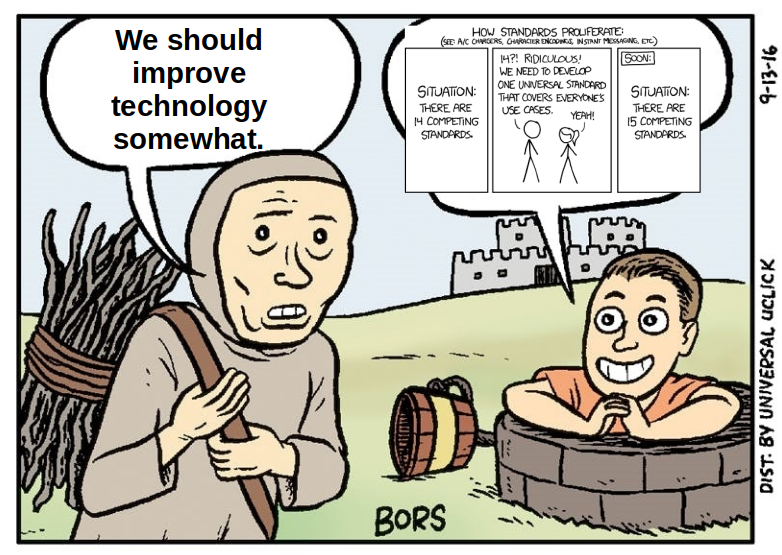
Totally not related to recent events
A good breakdown on their progress: https://news.ycombinator.com/item?id=43200604
same slogan everywhere, plant pictures for a strong greenwashing aesthetics, old white men smiling reassuringly. 5/7 homepage.
Just installed it on void. Still not quite usable for daily use but it’s not bad.
We definitely need more competition in the browser space, I just wish it wasn’t using such a permissive license as the BSD.
You’re free to fork and use a more restrictive license, that’s one of the cool things about BSD licenses. It’s not like it’s something dumb like the CDDL, which is incompatible with the GPL (and many other licenses) and the reason ZFS can’t be directly included in the kernel.
The main issue I have right now: the jurisdiction of this is in the US, and to be honest, I don’t trust the US that much when it comes to privacy laws regarding the (near) future.
what r they gonna do if it’s open source and doesn’t collect data. worry more about ur OS
I’m not naive enough anymore for this kind of trust.
I’m pretty sure my Debian doesn’t collect personal data either
the EU wants backdoors to encryptions, so eu not any better.
It certainly is the lesser evil though.