- 703 Posts
- 246 Comments






 0·3 days ago
Thanks for this. I didn’t know this, but so I’ll archive the BBC when posting from now on.
Thanks,but it’s strange. Here all is freely accessible. I was not aware that the BBC has paywall.



 0·4 days ago
As an addition:
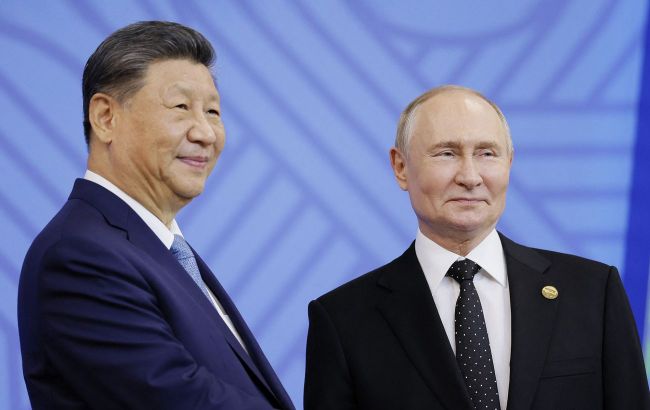
Ten years on, Brexit’s economic impact is becoming clearer
… The UK Trade Policy Observatory at Sussex University calculated a rapid 26% reduction in the different types of UK exports by 2023, while a new study from Aston University Business School using five years of more detailed trade data concludes a loss of 53.8% of the type of exports and 31.5% for imports …
UK trade with Europe had been on an upward trend before 2016. But official figures show that compared to 2019, 2025 UK exports to the EU were 14% down and imports were down 10%.
And they’ve been getting worse. Last year, 2025, was the worst year for UK goods export volumes to the EU this century, apart from one year in the depths of the financial crisis …
Think tank Niesr calculates exports were 16.9% lower and imports 16.1% less than what could have been expected based on positive pre-2016 trends. The Centre for European Reform uses a different method, trying to take account of what could have happened if the UK had not been excluded from a more recent surge in intra-EU trade, leading to a goods trade hit of 16% to exports and 14% to imports …
One area that has performed more strongly since 2016 is services … Services sector exports from the UK to the EU are up 57% over the last decade [but] it is also true that there has been a service boom across the advanced world and some argue Britain might have done even better without Brexit …
Investment by businesses was significantly lower than what might have continued after Brexit, according to two studies. Former Bank of England independent economist Jonathan Haskel calculates a £29bn or 1.3% reduction in the size of the economy from lower investment than would have been expected since 2016 …
Business investment flattened in real terms immediately after 2016, and notably underperformed various measures of UK long term-trends and comparisons with other countries …
The most visible sign of economic shock was the fall in the value of the pound in the minutes and then years after the referendum. This makes imports and travel more expensive, and makes UK assets worth less in the world …



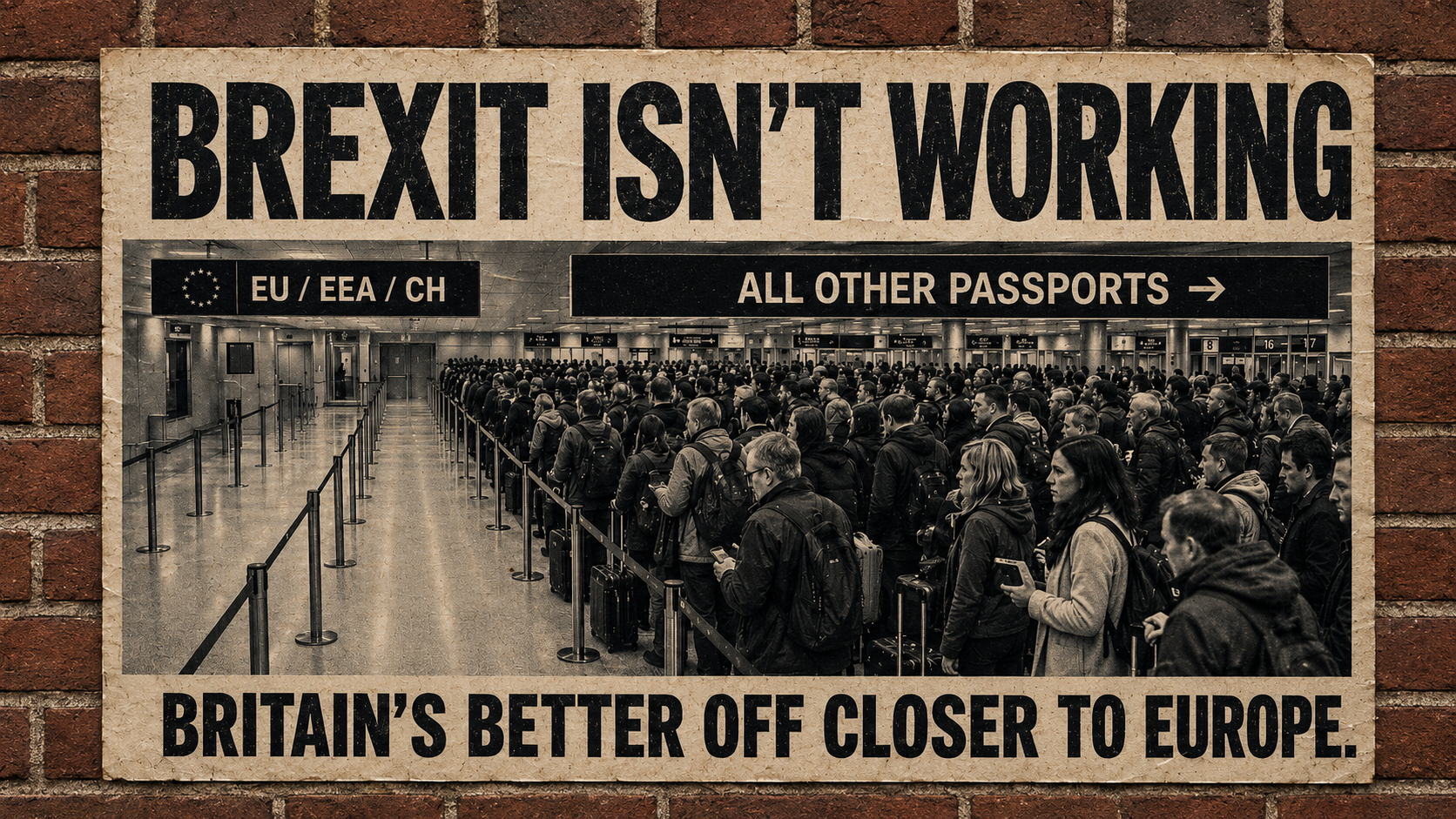
The Kremlin appears to have settled on an official explanation for Russia’s fuel crisis, blaming it not on a gasoline shortage stemming from Ukraine’s ongoing strikes against the country’s oil refining infrastructure, but Russians themselves, as reported by the Insider:
… Kremlin spokesperson Dmitry Peskov said one of its [the fuel shortage’s] causes was “completely unfounded panic buying,” comparing it to the mass purchasing of the staple grain buckwheat at the start of the COVID-19 pandemic.
Peskov’s statement came at the start of June, and governors and ministers have been repeating the claim since. Official Russian narratives to explain long queues at gasoline stations are that drivers had started buying gasoline “just in case" and to prevent “speculative demand,” while the same officials say restrictions on fuel purchases were necessary in order to prevent “artificial panic buying.”
At the same time, though, the Russian State Duma deputy accuses government of concealing scale of fuel crisis, warns it could cost certain officials their seats in September elections. The deputy doesn’t say whether or not Putin is one of these officials.
At least ordinary Russians appear to maintain a sense of humor as they are posting horse videos on social media.
In possibly related news, it is said that a record numbers of Russians are searching the internet for when the war in Ukraine will end
 0·10 days ago
This article is a good example of how China’s propaganda works. As one recent investigation has found,
China’s goal [of its propaganda operations] is to build a positive image of itself. Freedom House describes this as a long-term strategy aimed at “telling China’s story well”. At its core is the image of China as a successful, trustworthy and indispensable partner.
Oh, and the article is referencing to the U.S.-China Business Council, a researcher at Renmin University of China in Beijing, and Zhu Min, a Chinese economist and former deputy managing director of the International Monetary Fund who also held senior positions at the Bank of China and the People’s Bank of China.
Such articles are pure propaganda.
When?
If a post criticizes the U.S., do you also comment, “Nothing different that what China is doing”?
I guess no, you don’t, this whataboutism works only in one direction.
The usual whataboutism. I am really wondering how many of such comments are coming from bots. This must be automated.
Hard to stay in the loop these days …
Russia prepares mass gasoline imports from India to cover 25% production plunge, and eyes diesel export ban
Russians are searching ‘how to siphon gas’ ten times more often than three months ago
In late March, Russians were searching Yandex for instructions on “how to siphon gas” roughly 4,000 times a week. Over the past week, that figure reached nearly 44,000.
Google data shows that Russian interest in the query stood at 8 to 10 points in March. Last week it climbed to 43 points, and in the current week — only just begun — interest has already hit 100 points, the maximum possible score.
Amid this, Russians have been posting on social media about strangers draining gas from their cars or from vehicles belonging to people they know. Some of these incidents have been caught on video.
A fuel crisis has begun in Russian regions following Ukrainian drone strikes on oil refineries and fuel depots.
 36·14 days ago
Are you one of these propaganda accounts that can’t cope with justified critique of China?
I already commented to the same accusation in another thread.
Are you part of the orchestrated pro-China, anti-Western propaganda machine here on Lemmy?
@maniacalmanicmania@aussie.zone
For starters, it is not your business where I am from.
And your remarks about me of being an ‘undeclared bot’ are, of course, rubbish. I post well-sourced articles (as you can see), but here on Lemmy are many propagandists that not only support dictatorial regimes but, more importantly, spread anti-Western content to stir up anti-democratic sentiment. Although I think these are mostly not bots but rather human beings parroting narratives provided by an orchestrated disinformation machine, you’ll find plenty of opportunity to spot them and call them out.
The Lowy Institute titles, “Australians now wary of both China and the US,”
In 2026, Australians are … placing low levels of trust in both the United States and China.
Trust in the United States to act responsibly in the world has fallen to 31%, the lowest level in the history of Lowy Institute polling. This new low represents a five-point drop from last year and a 25-point drop from 2024 …
Trust in China to act responsibly in the world has risen eight points since last year to 28%, narrowing the gap with the United States to just three points. In 2022, that gap was 53 points …
But the positive thing is:
Australians place high levels of trust in liberal democracies and the United Nations.
For the sixth year running, Japan is the most trusted power, with 89% of Australians saying they trust Japan to act responsibly in the world. Germany is the next most trusted power (83%), followed by the United Kingdom (81%). Seven in ten Australians (70%) say the United Nations is either ‘somewhat important’ or ‘very important’ to Australia’s national interests.
For two of Australia’s key regional partners — Indonesia and India — trust remains steady if moderate. Trust in Indonesia to act responsibly in the world sits at 57%, similar to last year’s result. Australians’ trust in India fell four points from last year to 50%.
Of the countries surveyed, Russia was once again the power least trusted by Australians with only 11% saying they trust Moscow to act responsibly in the world.
Yeah, the West bad, China the only solution. This hit piece doesn’t even try to justify the bold headline. It contains not a single number, no sources whatsoever. It’s just the usual Chinese propaganda bot spreading for the teenage tankies.
China’s ‘Natasha’ toy trend draws backlash over violence and racism - [video, 2 min]
A wave of videos showing a Black baby doll being beaten, pulled and thrown spread across Chinese social media before critics blasted the trend for violent imagery and inappropriate marketing.
Edit:
One paper on Chinese racism concludes (opens pdf):
Racism is not just a Western problem, it is a problem in China too. In many ways, China can be viewed as racist. From ancient times, racism has been part of the construction of the Chinese Han population. Perceptions about their standing in the international realm has provided their course of development and fuelled their ideologies that embed racial context … The development of the Han race was centred on the Chinese perception that they are the most advanced and superior race in the world and any other culture that came to China had to be either eliminated or adapted into Chinese culture in order to stimulate civilisation. The Chinese Government choose to dominate regions of ethnic minorities so they can maintain control and enforce racial opinion that allows a consistent consensus of the superiority of the Han population. The Tibetan and Uighur regions have become subject to this kind of manipulation and institutionalised racism has become a specific tool of domination.
China can be viewed an extremist country, its racial tactics have been compared to those of Nazi Germany as it singles out other races in the quest for its own absolute power. China can be likened to North Korea in the sense that it takes violent and discriminatory measures to eliminate ethnic minorities that would ‘contaminate’ their pure race.
Here is a series of article on Chinese racism in more recent contexts.
A rights group reported, From Covid to Blackface on TV, China’s Racism Problem Runs Deep, and urged China [To] Combat Anti-Black Racism on Social Media.
You’ll find much more on the web.
One paper on Chinese racism concludes (opens pdf):
Racism is not just a Western problem, it is a problem in China too. In many ways, China can be viewed as racist. From ancient times, racism has been part of the construction of the Chinese Han population. Perceptions about their standing in the international realm has provided their course of development and fuelled their ideologies that embed racial context … The development of the Han race was centred on the Chinese perception that they are the most advanced and superior race in the world and any other culture that came to China had to be either eliminated or adapted into Chinese culture in order to stimulate civilisation. The Chinese Government choose to dominate regions of ethnic minorities so they can maintain control and enforce racial opinion that allows a consistent consensus of the superiority of the Han population. The Tibetan and Uighur regions have become subject to this kind of manipulation and institutionalised racism has become a specific tool of domination.
China can be viewed an extremist country, its racial tactics have been compared to those of Nazi Germany as it singles out other races in the quest for its own absolute power. China can be likened to North Korea in the sense that it takes violent and discriminatory measures to eliminate ethnic minorities that would ‘contaminate’ their pure race.
Here is a series of article on Chinese racism in more recent contexts.
A rights group reported, From Covid to Blackface on TV, China’s Racism Problem Runs Deep, and urged China [To] Combat Anti-Black Racism on Social Media.
You’ll find much more on the web.
China’s ‘Natasha’ toy trend draws backlash over violence and racism - [video, 2 min]
A wave of videos showing a Black baby doll being beaten, pulled and thrown spread across Chinese social media before critics blasted the trend for violent imagery and inappropriate marketing.
This may be true for consumer electronics, but not for all the components that are of importance in this context.