
🦊 helloyanis :veripawed3:
💻 #Opensource #developer!
🦊 #Furry #Fox
🇨🇵 #French
🖼️ Profile picture by @xanthe
🤔 I can’t think of any other bullet points
- 18 Posts
- 65 Comments

 1·8 days ago
@Duke_Nukem_1990 For this one verification platform at least, yeah
@Fmstrat Well technically I added support for another platform just now (see github) and so I changed the name. I don’t think in 1 day I had too many users lol
@cipherd Snooping around in the console and not wanting to show my face to some random website! Also, reading the docs on their site helped.
More technical details https://github.com/helloyanis/agechecker.net-bypass/issues/14#issuecomment-4801644570
@birdwing I don’t have an account there but if you have one, feel free to do so! The code is MIT licensed so you can redistribute and even modify it if you want.
@kutt The block is a front-end popup that sends ID data to the back-end, and when the back-end completes verification, the front-end dispatches an event and closes the popup window.
So if, let’s say, an extension replaced the popup script by something that would fire the event immediately, then sites would work!
@Fmstrat When it works on other site I will change the name! For now it only works on agecheck.net so it’s named like that to not confuse people who haven’t read this post.
@TheDarkQuark if they change it, then all of the websites using it will also have to change their code. But I don’t think they will change it unless the extension goes crazy viral, they won’t bother imo
@bamboo Not sure if that’s exactly what you mean but each site can set up the age verification by loading a script and adding event callbacks, like redirect_url to set an URL to be redirected to once the verification is over, and onclosed which occurs when the verification is successful, and where the site can set some code to run.
So if you just block the popup, it never appears and can never fire onclose and the code that happens after will never run.
Since sites are often minified and obfuscated, and the call for the popup can come from any file, I just replaced the response to requests to the popup URL, to have my own script that fires the event and/or redirects to the page, so that it works every time.
I think the only way to counter this is, if they change the URL (I can later update it too, or if a website hosts their own version of the file (so it will be at a different URL and be undetected). But all of these have easy workarounds as well.
@ZeroHora This is just a facade so that we eventually take over the world, but shh!!
@bamboo I dont’t think so? I’m not sure how uBO filters works but the popup file is supposed to send an event to the main page to let it know that the verification is done and I don’t think uBO filters can do that
@rockSlayer Glad you like it! Hopefully it gets approved on the store so it can be installed more easily!

 0·19 days ago
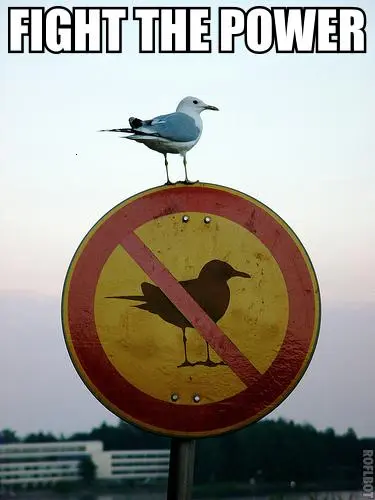
@perviouslyiner Okay that one is also really funny lol, where even is that? Is anyone supposed to bike for 10m then dismount, and walk 5m, remount and repeat?
Where this photo was taken, there are pedestrian crossings on bike lanes just like roads and bikes are supposed to stop and let pedestrians cross, but not dismount every time, that’s just nonsense lol
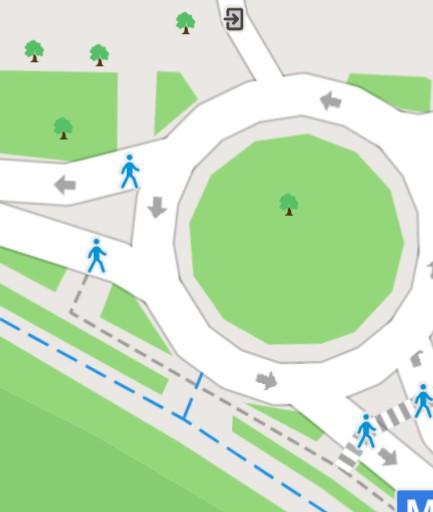
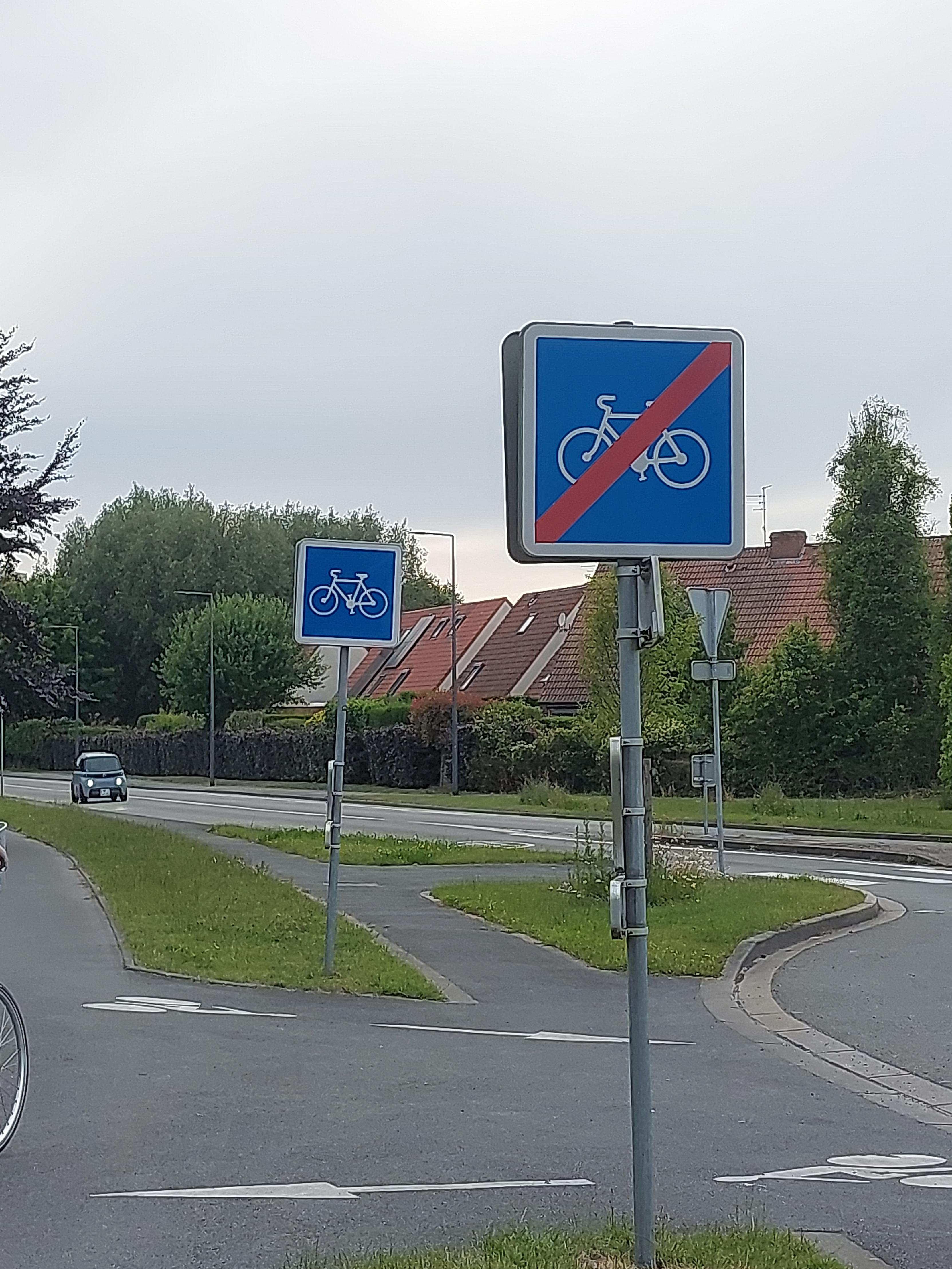
@ciapatri I don’t think that’s the case because the intersection is just for bikes. See the map, the picture was taken there and the blue dashed line is the cycling lane.
The signs mean “Beginning of bike lane” and “End of bike lane”
I think they finished the cycling lane first and installed the “End of bike lane” and later they continued it and for some reason instead of removing/moving the old sign, they made a new one!
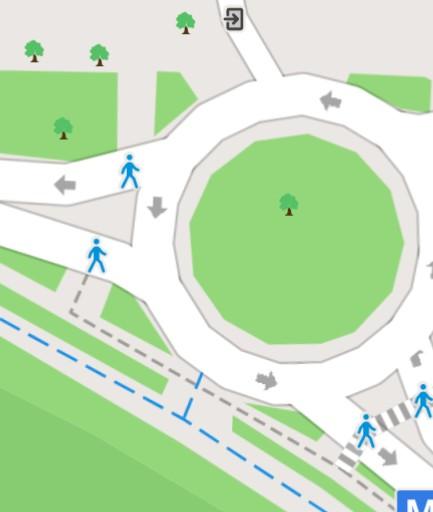
@eestileib Cars don’t even cross there! The picture was taken here, the blue dashed line is the cycling lane.
@vapeloki The issue is, once again, not that the app allows you to bypass age verification or anything with how countries implement it. It’s that the app makes it extremely easy to get the data and spoof someone else, while claiming it’s secure and privacy focused while it is not.
A prectical example would be :
- Someone steals my phone
- They can access the app as they can bypass the PIN
- They can appear and act as myself on any platform that will use the system to verify
No matter how countries implement it or how the app is still “in development”, I’m just saying that this current implementation is insecure and can be very easily hacked besides what is being said on the public spaces like the dedicated website and the twitter account of the president of the EU commission.
I will probably stop replying to this thread now as you keep telling me the same arguments and even when I demonstrate how I disagree with them, you keep repeating the same ones so I’ll just stop wasting my time
@vapeloki I really don’t get what you say with “there is no app”. The repo is literally called " age verification Android application". It’s not an SDK
Also, why shouldn’t it matter what Ursula said?The part of the readme you linked me mentions “In particular, any national-specific enrolment procedures must be implemented by the respective Member States or publishing parties”. This does not relate to the security of how data is stored.“The current version is not feature complete”, well, it’s not what I’m complaining about. The thing is the feature that are there are not well made and use an approach that don’t focus on security and privacy.
Yes it’s a demo but if they want people to base their implementation based on that, then every implemenation will be faulty. A demo is meant to DEMOnstrate how it’s done. It never says anywhere it’s a prototype and if it was so, they wouldn’t brag about top notch security on their web page.
But anyways, you probably won’t change your mind.










@Skyline969 I meant you won’t be able ti use the disc drive for that’s still being sold full price today for games beyond 2028. I edited the post to clear that up.
Also, PC gaming is digital but most of the times you have the game files downloaded somewhere, you can make a backup, and unless the game is online only you can theoratically play it forever.
With this, once Sony eventually takes down the store just like they did for the PS Vita, then you won’t be able to play games at all, and will very likely be the proud owner of a fancy black and white brick. They can also remove games from your library and this will make you unable to buy used games.