
- cross-posted to:
- atheistmemes@lemmy.world
- cross-posted to:
- atheistmemes@lemmy.world
You must log in or register to comment.
Out of concern for how much the “Bible Belt” throws in with Israel’s Zionist bullshit, I did some basic searches on the topic, and the discussion was a bit different than I thought it’d be.
People need a place to belong. For many, they have communities in cities that fit. For rural areas, it’s one thing to say “Stop listening to that televangelist ordering you to deposit your savings”, but you’d need something else to take that place - something to believe in.
That’s where more progressive preachers, people similar to the current pope, are shaming themselves for not stepping up enough, recognizing people’s needs and being genuine voices of compassion; not trying to be the economic “immigrants pay taxes” or scientific “colleges fuel cure research” voice, but the “Be good to your neighbor” voice.
So even though I’m not a believer, I’m at least seeing the way churches can bring communities together rather than leave all one’s connections to Facebook. The important thing is what sort of voice is unifying them - because by god, there’s a million ways to pervert the message of any major religion into one of hate.
Life is hard people are desperate for some source or strength. Makes sense.
The more you know, the more you know you don’t know.
The less you know, the less you know you don’t know.
Yeah I’m not so sure about this haha. I work in academia, and there is quite the abundance of closed mindedness and dogmatism.
I think that’s just the comfortable position for humans. Questioning what you know to be true is hard, and the more fundamental the fact the more uncomfortable it is to doubt. Which is also why religion is so attractive.
I work in academia, and there is quite the abundance of closed mindedness and dogmatism
Are we talking about discrimination against young or foreign academics not getting grants and degrees because of bias about who should be the ones leading research and hesitancy to invest time, money and political capital into new tech, or are we talking about “They didn’t want to read my paper about how I think the sun pooped out the Earth and why this is evidence for God”?
Seriously, that’s a loaded claim, you need to provide some context and nuance there, I haven’t met many actual scientific-minded people who are dogmatic, that is usually the exact accusation thrown out by theists who are butthurt that evolution exists and can’t be disproven.
Ah ok, so you seem to have misconstrued what I’ve said here and have added in your own assumptions and straw men. That’s ok, it happens to the best of us (myself included).
I’m definitely not trying to equate science with religion in every way. I just think it’s fair to acknowledge that science, being a human endeavor, isn’t immune to things like gatekeeping, resistance to new ideas, or institutional biases. That doesn’t mean science as a whole is bad or anti-progress. We’ve achieved incredible feats with science; we certainly didn’t “pray” our way to the modern automobile, or to the smartphone. All I’m saying is that, like any field, it has its challenges. And those challenges and weaknesses can be more than people or scientists like to imagine. I’m simply pointing out that dogmatism can exist anywhere, even in spaces that pride themselves on being open to new information.
The fact that you’re immediately jumping to extremes of either systemic biases in funding or absurd pseudoscience, kind of proves my point ironically. I’m a researcher at a nationally recognized university, and trust me when I say that there are many like you who seem to get their jimmies all riled up the second that someone so much as mentions that “scientific research may fall victim to dogmatism and other forms of human egoistic thought - just like religion”. It’s a strange phenomenon I’ve observed when people associate their entire identity with their specific scientific endeavors. And I get it too (and to say I don’t fall victim occasionally would be a lie). It is difficult for your ego to let go of 30 years of hard work and research, even when new data / evidence comes out to prove you wrong. It’s not easy to say “yup the research I associated my identity with the last 30 years? That’s actually all wrong”, but a good scientist is one who doesn’t attach ego to their work and remains perfectly objective. Much harder said than done- trust me.
Ah ok, so you seem to have misconstrued what I’ve said here and have added in your own assumptions and straw men.
No I literally just asked you a question which direction you’re coming from, and the fact that you had to respond with this reactionary, defensive BS instead of using the opportunity to distance yourself from the kooks tells me you don’t have good-faith stake in this and my second option is probably true. No way I’m wasting my time reading further or engaging. Have a good one kook. Go ahead and say whatever you want, you’re blocked.
Reminder other readers: science is not dying, science is in a good shape other than US funding, we are making amazing discoveries every day around the world. The academic world isn’t perfect but it’s working. There is no coverup or conspiracy. Whatever sensational BS you guys read on the headlines, it’s not true, I promise, please talk to people who actually work in science and academia before trusting headlines.
https://en.m.wikipedia.org/wiki/Normal_science
Read this. I used to favour Popper, but I now quite like Kuhn. Kuhn is based.
My point is that the scientific endeavour according to Kuhn is not an inherently critical one(as it is with Popper, for example). Science is based on dogmas, positions and suppositions that are not questioned within a paradigm.
Also, if something can’t be disproven, it isn’t science.
Yeah no one seems interested in my perpetual motion machine.
In this Lemmy we obey the laws of thermodynamics!
I don’t think Lemmy is a closed system.

What you know about a few cultures built around one monotheistic religion does not generalize to all religion.
Yeah cause other religions are so progressive and constantly evolving for the better lol
I met people on both sides that had either of those attitudes.
The “I’m always right because I have a PHD” is not uncommon, even on fields not covered by their education. At the same time, I’ve met many religious people (Muslims, Hindus, Christians) that for them religion was a private, personal aspect that helped them deal with their lives. As a kind of a routine, something done time and time again enough to clear up their minds from stress and give them an anchor when lost.I’m not religious, but I believe in freedom and the pursuit of happiness, and I support anyone as long as it doesn’t interfere with other’s.
Those many “private, personal” benign religious people form a strong foundation upon which the crazies, cults, and conmen build their structures.
In my experience, these benign people are one tragedy away from metastasizing into the malignant religious type.
I have cousins who were benign-religious for most of their life, but after a death in the family they started following a new sect of christianity. Their children have never seen a doctor, nor a vaccine.
I agree people are entitled to their personal freedoms, but we would be much better off as a society if we could educate our way out of the cancer that is religion.
In my experience, these benign people are one tragedy away from metastasizing into the malignant religious type.
This kind of thinking and language is also used by a variety of “Anti-Theists” talking about the “Woke mind virus” and working together with current US fascism.
Talking about people as “diseases” is a pretty good indicator of Fascist ideology and you might be more entangled by it than you think.
I think my post makes it quite clear that I was not referring to people as diseases, I specifically said that religion is the disease. The people are victims to the disease.
And if it isn’t also obvious, I do consider myself an anti-theist. The overall effect of religion on society is negative, and we would be better off without religion. I don’t see what this has to do with “woke mind virus” nonsense.
I agree, but I also fear religious people. Religion has time and time again interfered with people’s autonomy.
It still does to this day. Women in Oman, for example need a man (even if it is their son) to approve of her surgery. A woman needed surgery, but had no male relatives closeby to approve it for her. It was an emergency. Thankfully it was approved, but required a lawyer.
Christianity isn’t any better where I live.
Religion is fine on a personal level, but dangerous for everyone on a larger scale.
You seem to be conflating religion and culture with regards to Oman.
My God, a reasonable person talking about religion on lemmy
I see somebody downvoted you already, but I completely agree with you 💯
The ratios are the opposite though.
Except they don’t even read their own book.
They certainly don’t practice what is in there.
Only whatever their pastor cherry-picked from it.
Not even that.
There are multiple points in human history where science has overestimated itself.
In Abrahamic religions, God is all knowing, not people. Eastern religions are more abstract, some have all knowing deities and some do not.
Science is a process, like running. It has no consciousness.
That’s certainly an oversimplification.
Science has representatives that are susceptible to the flaws in human thinking that are also apparent in religion. The recent pandemic made that very clear.
There is a scientific community that has good and bad players in it. Science doesn’t get to wash itself of human corruption just because it’s a process
Science is a construct made by humans in their effort to best understand the world they exist in. The consciousness of science is not nothing, but the collective conciousness of every human being that has participated, and along with it, their collective follies and limitations.
Religion is a very broad umbrella. Quite many people understand the divine as an unknowable mystery they never stop being curious about
There is also an idea in philosophy of science called “pessimistic meta induction”. Basically the concept is that science is a continually evolving process where we get increasingly accurate understanding about how things work. However since science progresses by falsifying previously held beliefs we can speculate that all of our current scientific theories are technically false.
It’ll end up like the Bohr model. Someday we’ll miss the elegant simplicity of everything just being vibrating strings.

Plenty of people claiming to be on the side of science think they know everything too.
Nobody likes to work with those people and they generally don’t do very well in their careers. Sometimes you get an exception but it’s pretty rare. Most technical people I’ve met are very curious people and in my experience, the most likely to actually update their views with more information.
I often see this sentiment on the internet, but I wonder what definition people who hold this view are using for “religion” to reach this conclusion. I have found that the definitions of “religion” and “faith” in use by people are so varied or vague that they are almost pointless to use. The way I define them, everyone is religious and faith is a necessity.
life presents a dilemma to me: I would like to conclusively know everything about the universe and reality before deciding what choices to make, but I do not have that luxury. I must make decisions daily with what amounts to almost no information. Faith is not an optional part of life. Some people recognize that necessity and others do not. It is merely a question of who and what you place your faith in.
Rather than use the word “religion”, I would be much more interested in asking about people’s worldviews. Wikipedia gives this description: One can think of a worldview as comprising a number of basic beliefs which are philosophically equivalent to the axioms of the worldview considered as a logical or consistent theory. These basic beliefs cannot, by definition, be proven.
I have boiled this down to two essential questions about the nature of life/existence/reality that can be graphed on a quadrant:

The horizontal axis is the duration of existence. The difference between a worldview with an infinite existence and a worldview with a finite existence is immeasurable. If I believe in an infinite petsonal existence, then my actions have infinite consequences which I must experience the results of. Short of infinite personal existence, I may believe that life/the universe will exist forever, but that I will personally cease to exist when I die. In this case, my actions may still have infinite consequences (for future generations) but I will not personally experience them. A purely finite/temporal worldview would mean that I believe that everything will end in the heat death of the universe or similar life ending event. In this case, it ultimately doesn’t matter what I, or anyone else does in life, everything will end the same way for everyone and all life.
The vertical axis represents the nature of our existence. Is the source of life personal or impersonal? If I believed a completely impersonal worldview, then I would believe that we are essentially just biologically pre-programmed to live our lives based on the DNA that we have been built from and that person hood/personal agency is a construct of the mind with no higher meaning. If I believed in a completely personal worldview, then I would believe that I am created by a personal being that is also interested in a personal relationship with me, and I am created as a reflection of their person hood.
These are foundational questions about the nature of reality that demand an answer. Every choice I make in my life should reflect the answers to these questions. But where are the answers?
In our current society, it seems to be accepted that science and religion are diametrically opposed and cannot co-exist. I have observed, especially on the internet, that if I espouse to be religious, then it is assumed that I believe in flying spaghetti monsters and think the earth is flat. I believe that intellectually honest people will find that they are actually in more similar circumstances than they realize. It would be foolish for me to disregard scientific observation and experimentation, but it would be equally foolish for me to disregard the limitations of those observations and experiments:
It is impossible to take a zero-trust approach with science (never trust, always verify). I don’t have access to a Large Hadron Collider to observe the Higgs boson for myself. I don’t have access to the LUX-ZEPLIN to experiment with dark matter. I don’t have access to the LIGO Lab to observe gravitational waves. I trust that these experiments are conducted correctly and that their findings are correct, but by doing so I am placing my faith in the scientists performing the experiments. I do so also knowing that complete objectivity is impossible. I have a personal bias. My own life experience and observations skew the way I see the world. I assume this is the same of other people, scientists included.

Even if I had access to all the equipment necessary, and dedicated my entire life to scientific experimentation, I would only be able to conduct a tiny fraction of experiments necessary to explore just a few of the questions about the nature of the universe. At the end of my life, I would likely have more questions about the universe than when I began.

Even if I had the time, ability, and equipment necessary to conduct all necessary experiments to explore my questions about the universe, I would be making a fundamental assumption that I am actually able to observe everything. I have no idea if there are other dimensions that I will never be able to observe or experiment with. I simply have to accept by faith that these do or do not exist.

Even if I assumed that everything is observable, and I had the capacity to conduct all necessary experiments, I would still have an impossible problem from a practical standpoint: I need to make decisions on a daily basis. I don’t have a lifetime to wait and scientifically determine the nature of the universe before I make a decision about how I want to live my life. I am living it right now. The fundamental truth about the universe matters in the decisions that I have to make right now.
This is why faith is a necessity. I look around, and I see that I am just one of over seven billion people on this Earth, and that Earth is just one of eight planets orbiting our Sun, and that our Sun is just one of billions of stars in our Milky Way Galaxy, a galaxy that is so vast, even travelling at the impossible speed of light, would take me thousands of lifetimes to traverse, and that galaxy is just one of possibly trillions of galaxies in what is just the observable universe. One thing is for sure. I am very small, in every sense of the word. To sit here, and read this paragraph again, and then think that I really know-it-all would make me one of the most arrogant beings in the universe. I know very little, and I live by faith.
Most people use “religion” to mean “organized religion” in particular, and many people further take it to mean christianity and christianity-like religions. Religion is a word that is hard to define, but I think that although there are many edge cases, most people mostly agree on what is and what isnt a religion. My point here is that, just because they are not definable in a strict sense, does not mean the words “religion” and “faith” are “pointless”. They very much have meaning.
Many words are like that: no clear definition but they refer to real things or ideas. For example, existentialism, postmodernism, artistic styles (such as cubism or impressionism), etc. And even many terms in the sciences are like that. None of the words mathematics, physics or philosophy have clear-cut definitions. Hell, i can take this to the extreme. Even words like water or gold do not have a clear definition, in the way that lay people use them. Seawater is water even though it is made up of more than just H2O. 95% ethanol is never called water, even though 5% of it is water.
My point is that memes like this use religion as a strawman because they don’t actually want to discuss the foundational concepts expressed by the meme. Which is what I addressed, in my admittedly very lenghy, response.
You do realize that’s straight up not true right? As a Muslim I don’t know how much of a thing biblical scholarship is, but on the Muslim side of things, uh… yeah. Literally no Muslim will say they “know everything”, because the non-scholars vaguely know they don’t know shit and the scholars will tell you “I don’t know shit”.
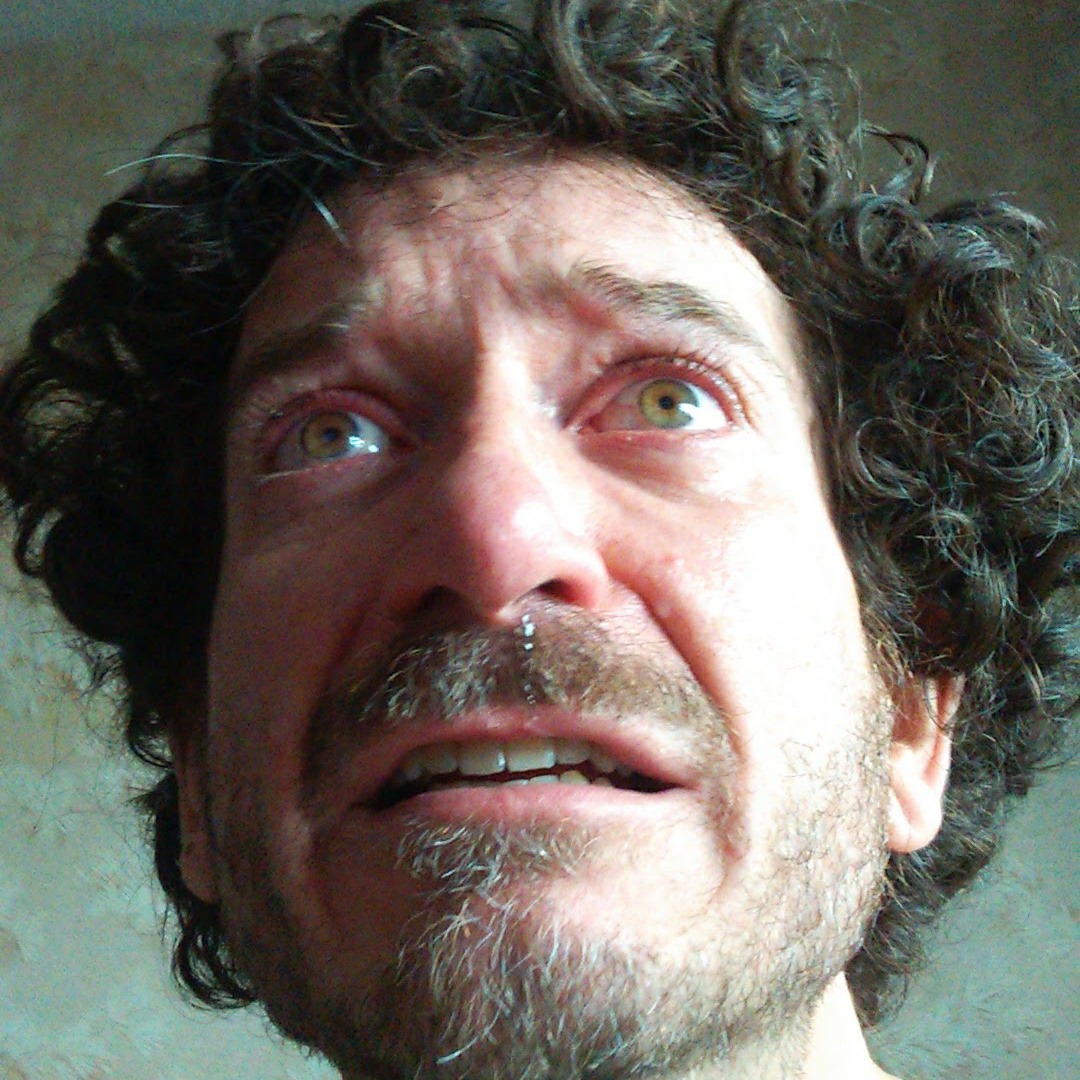
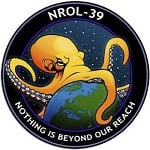
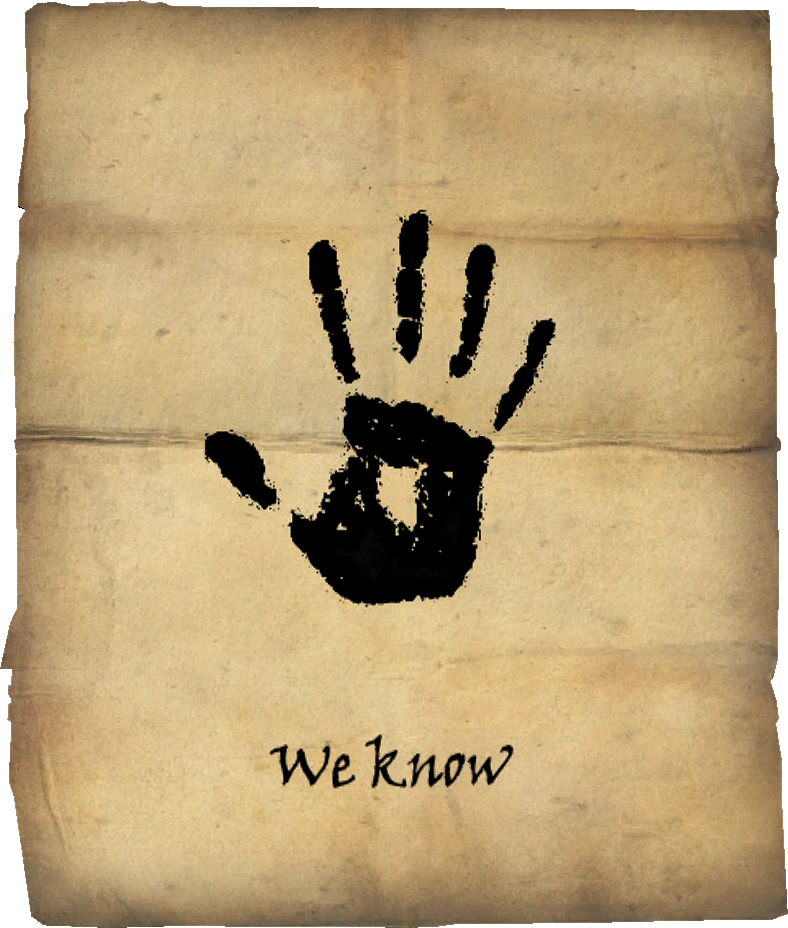
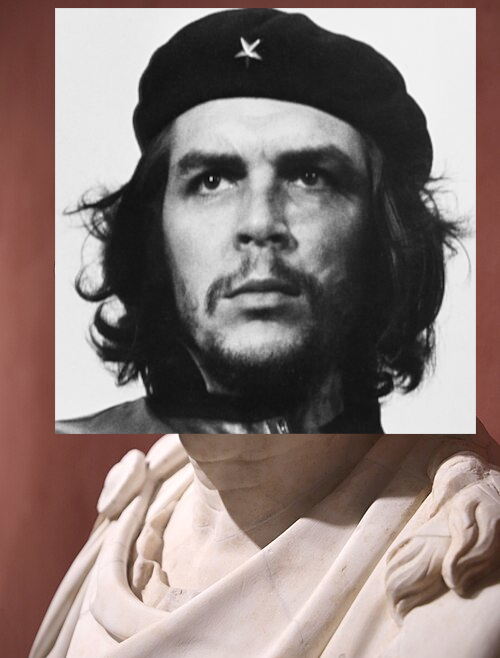
I interpret the image as saying: (some) religious people believe all answers worth knowing have already been revealed to us, and can only be found through study of the same few religious texts written hundreds of years ago. So those religious people don’t necessarily feel they already know everything, but they are convinced that the religious texts are the source of all knowledge.
I don’t know enough about Islam to claim that this applies, but it certainly applied to Christianity up until the enlightenment: there was no point in doing experiments to find out more about the world, the answer was already in the Bible. If you couldn’t see it yet, you needed to study the Bible more.
there was no point in doing experiments to find out more about the world, the answer was already in the Bible. If you couldn’t see it yet, you needed to study the Bible more.
For the umpteenth time in my life: What the shit Christians? Anyway if that’s the standard we’re working with then no, Islam isn’t like that; in fact the Quran explicitly states that all of God’s creation contains signs of His greatness that must to be pondered. Lemme just…
We will show them Our signs in the universe and within themselves until it becomes clear to them that this [Quran] is the truth. Is it not enough that your Lord is a Witness over all things?
I’ve met a scholar who joked that these days you are called a Hafiz, if you memorize the entire Quran. During history many scholars referred to as Hafiz also memorized a hundred thousand Hadith (reports about the life of the Prophet Mohamed sas) or more.
It is really crazy how strong many peoples convictions about Islam are, with how little they usually now about Islam outside of the hate filled propaganda they have been fed for the past decades in many western countries.
Religion: I don’t know everything…but my god does!
Psh that guys a hack MY book is better
But God puts thoughts in brain means I know everything!