


The world needs to move from fossil fuels to renewable ones, but the narrative pushed by powerful financial, political, and environmental institutions — that it’s necessary to massively scale up mining of “transition” or “critical” minerals to achieve this — is false, a new op-ed argues.
Not only do these minerals’ extraction cause countless environmental and community harms, the numbers cited about how they are used — and the number of new mines needed — don’t add up, a recent report has shown.
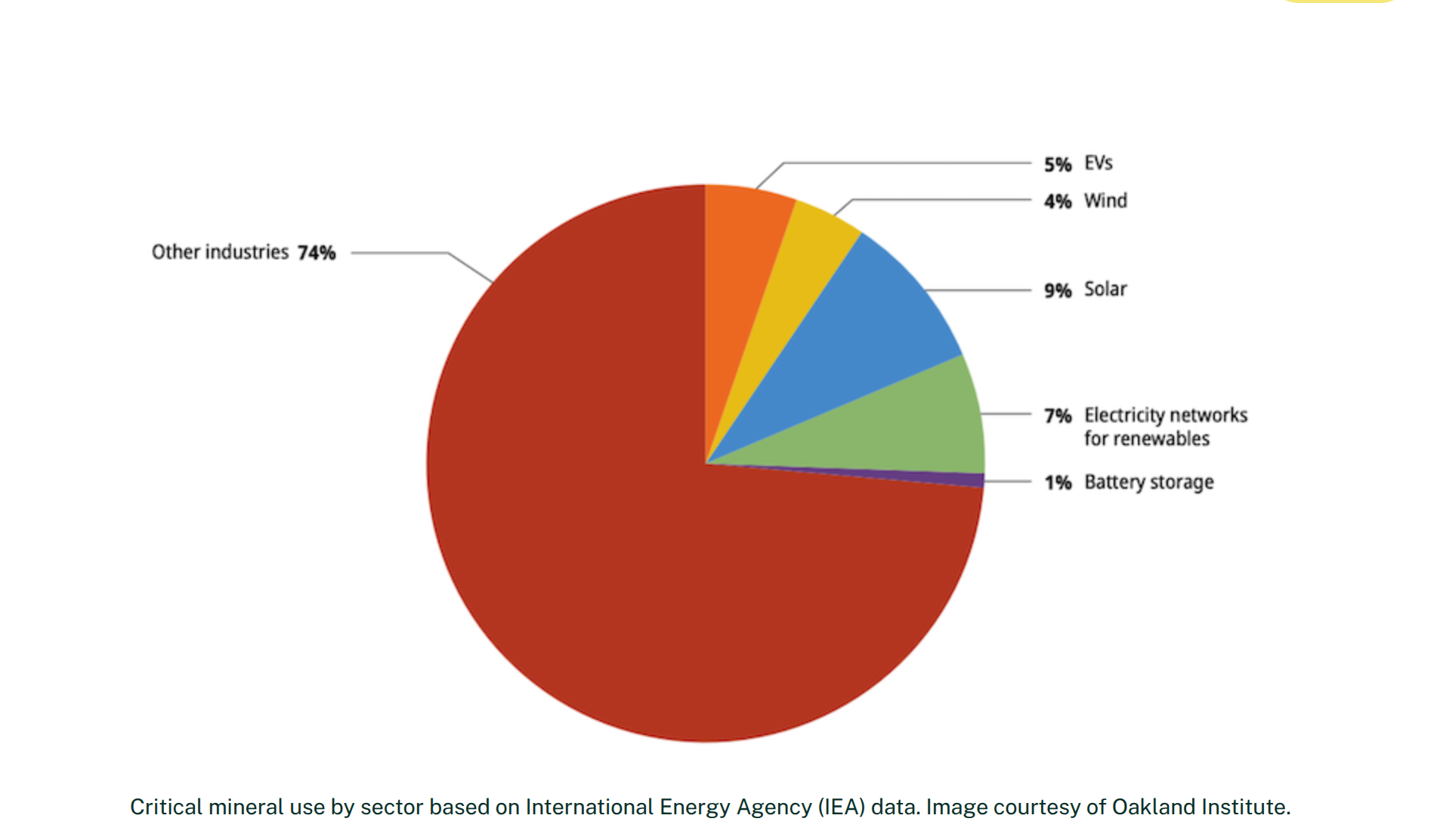
“The vast majority [of critical minerals] are used in industries that are either unrelated — or in direct opposition — to the clean energy transition,” the author writes.
“The grid cannot handle the load” has always been BS. Full stop.
Depending on where you are, the grid can’t even hand current loads. There’s absolutely work that needs to be done to keep up.
I never said the grid is perfect as is. Just that those saying it cannot handle EVs are blowing smoke.
Notice how few politicians whined about the grid when it came time to talk about data centers? At least not until it came time to reconcile plans against reality…
Notice how the politicians supporting data centers didn’t say “no” from the start, like they always do with pushing EVs?
Well that’s a bit more elaborate from what you initially said :P
https://spectrum.ieee.org/grid-congestion-uk
https://www.iea.org/commentaries/grid-congestion-is-posing-challenges-for-energy-security-and-transitions
etc
How much of that magically new congestion is merely increased AC usage from climate change?
edit: why did you downvote me ya dick?
not a lot I suspect, renewables is the biggest driver of transmission grid upgrades
netherlands in particular was not built for renewables but has the most enthusiastic renewables deployment in europe:
He explains that the problem is that the grid “was designed in the days when we had just a few very large, mainly gas-fired power plants”.
"So we built a grid with very big power lines close to those power plants, and increasingly smaller power lines as you got more towards the households.
“Nowadays we’re switching to renewables, and that means there’s a lot of power being injected into the grid in the outskirts of the network where there are only relatively small power lines.”
And these small power lines are struggling to cope with all the electricity coming in from wind turbines and solar panels scattered around the country.
https://www.bbc.com/news/articles/cn40y9yxkgvo
You can charge an EV on a regular socket. Unless you are driving a lot that would be enough.
The majority of car journeys are less than the distance I cycle to work. You don’t need fast charging for that. When you need it is on the rare occasion you do make a long distance trip. So 100+ kW at motorway service stations and perhaps a few others scattered around is really all you need.
Other places a lot of people park like work and shops could have a few moderate speed ones too, but even where we have them here most people with EVs don’t really use them much. Still, having a few would be pretty helpful for those without home charging options. An hour to charge kind of speed would be fine if it is while shopping, multiple hours if its at work.
That was the big surprise to me with my EV. I can usually get away with charging on a 120v outlet.
“The dividends to shareholders can’t handle the load” is the correct phrasing. Underinvesting in infrastructure maintenance and expansion, and in R&D, solely in order to re-distribute the wealth.
To the major shareholders.