

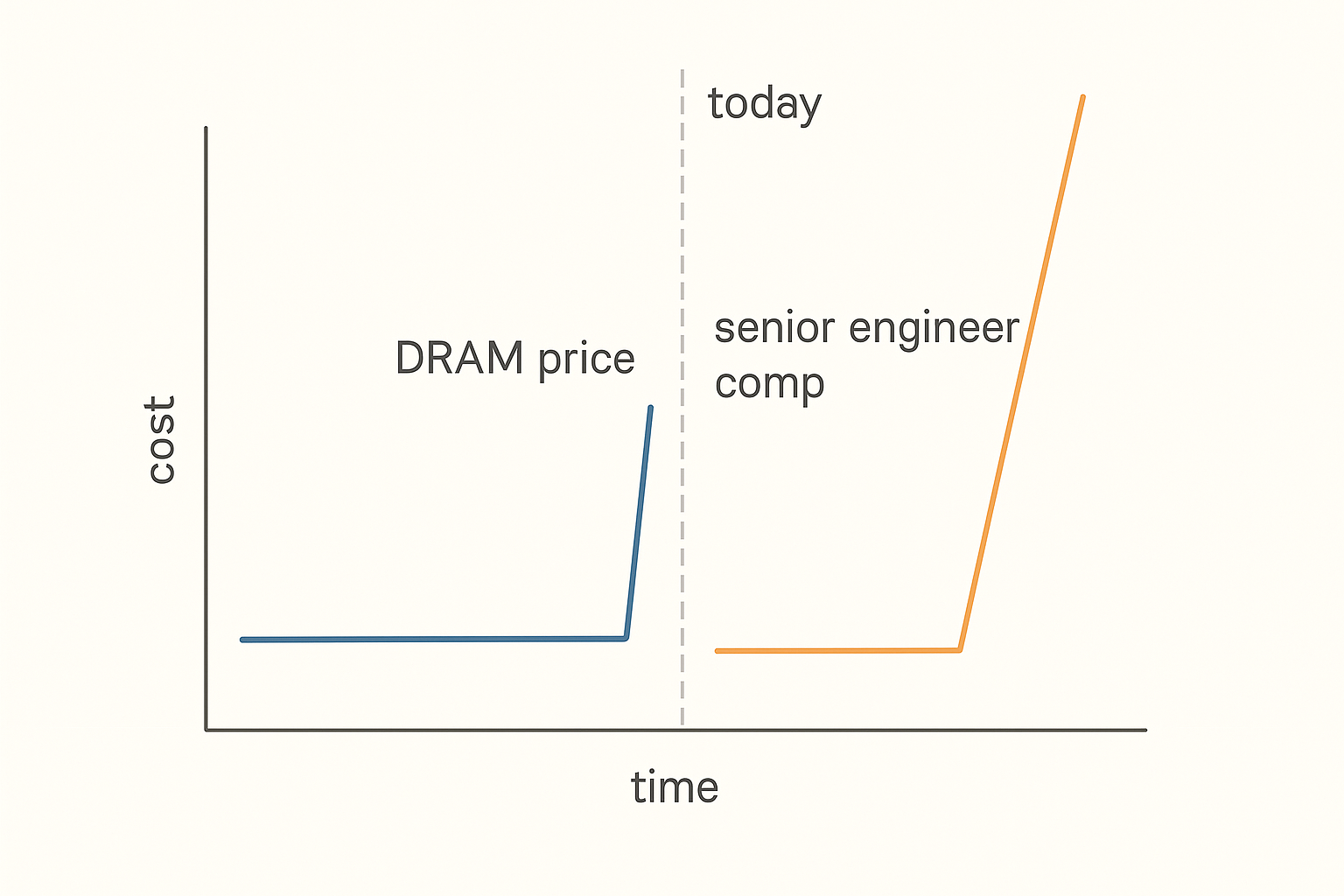
ETA: summary…
Author describes how agentic coding tools have disincentivized the developer training and mentorship pipeline that the software industry has implicitly relied on to produce seasoned developers, predicting that once the shortage is fully realized it could take years to reverse.
The solution proposed is for managers and senior developers to get ahead of this shortage by foregoing the immediate yet shortlived productivity maximization offered by the agent-multiplied-senior structure in favor of longterm sustainability by deliberately facilitating experience fan-out to juniors.
The methodology proposed is based on a successful nuclear engineering apprenticeship program carried out on active service naval submarines.
Articles about this looming problem aren’t new, but this one stood out to me for the author’s diligence in
I’m particularly interested to hear critique of the author’s apprenticeship model, where it might fail, how it might be improved, etc.
Full disclosure, I’m not a senior developer, but a senior elsewhere in IT facing this exact same situation.
Like the author, I’ve also identified our cannibalism of our juniors with the obvious future consequences to this if continued unabated. I’ve struggled with how to combat this, and I really give the author lots of credit for producing actual actionable plans on a path forward.
The main failure mode I see for the proposal is organizational self interest. Investing in juniors made sense in the past because the junior work (grunt work) was needed completion anyway so the exercise of training produced a useful result while also freeing up cycles for seniors to engage in higher level work. The result is that the training of the junior became partially subsidized by their output. Today that isn’t really the case. A senior with an agentic workflow can likely produce the same result as the junior with only a rounding error of effort. This shifts the organizational incentive model significantly to the point were training the junior is purely a cost sink with only a negligible return to the organization.
The author points out properly that systemically across the industry cannibalizing juniors eventually means cannibalizing future seniors, but wrongly assumes that training juniors inside the organization means producing seniors long term in the organization. Unless the entire industry adopts the new system to train juniors there will be organizations that simply poach juniors that have been trained up. Money is fungible. If it takes money to train the junior an org could take those same dollars and offer relatively obscene salaries to trained juniors.
From my view, seems like it will always be more expensive to train than to hire those trained. What am I missing here? How can an org that trains up its juniors (using the author’s good suggestions on how) guarantee they keep their trained juniors (or at least retain enough to make the whole exercise worth it)?
How do you keep people? Same as always: treat them well, pay them fairly, don’t be a dick. It’s quite easy actually. Of course, if you can only think short term, that sounds like a waste of money, but long-term, it’ll pay off.
And when I say “you” I mean the generic you, not you specifically.
Basically. Making employee retention a priority pays off. Getting new people spooled up is expensive. Team productivity dips while the newbie gets their bearings. Keeping the knowledge around.
Although, another problem would be people sticking around which would block Jrs from moving up.
How about a hypothetical:
Take your current paycheck amount, now multiply it by 10. That’s the pay offer from the other probably dickish company. If you last even just 1 year at dickish employer, you can take the next nine years off and still be ahead financially. If you last 2 years, you may be financially set and done working for the rest of your life.
Would you stay at your current employer?
I’ve kind of done this hypothetical in real life. My quality of life is better than my friends who took this offer.
Perhaps the specifics of your example are different. Your quality of life still going to work everyday is better than your friends who retired comfortably 20 years early? If not these specifics, what were the ones you and your friends had in front of you?