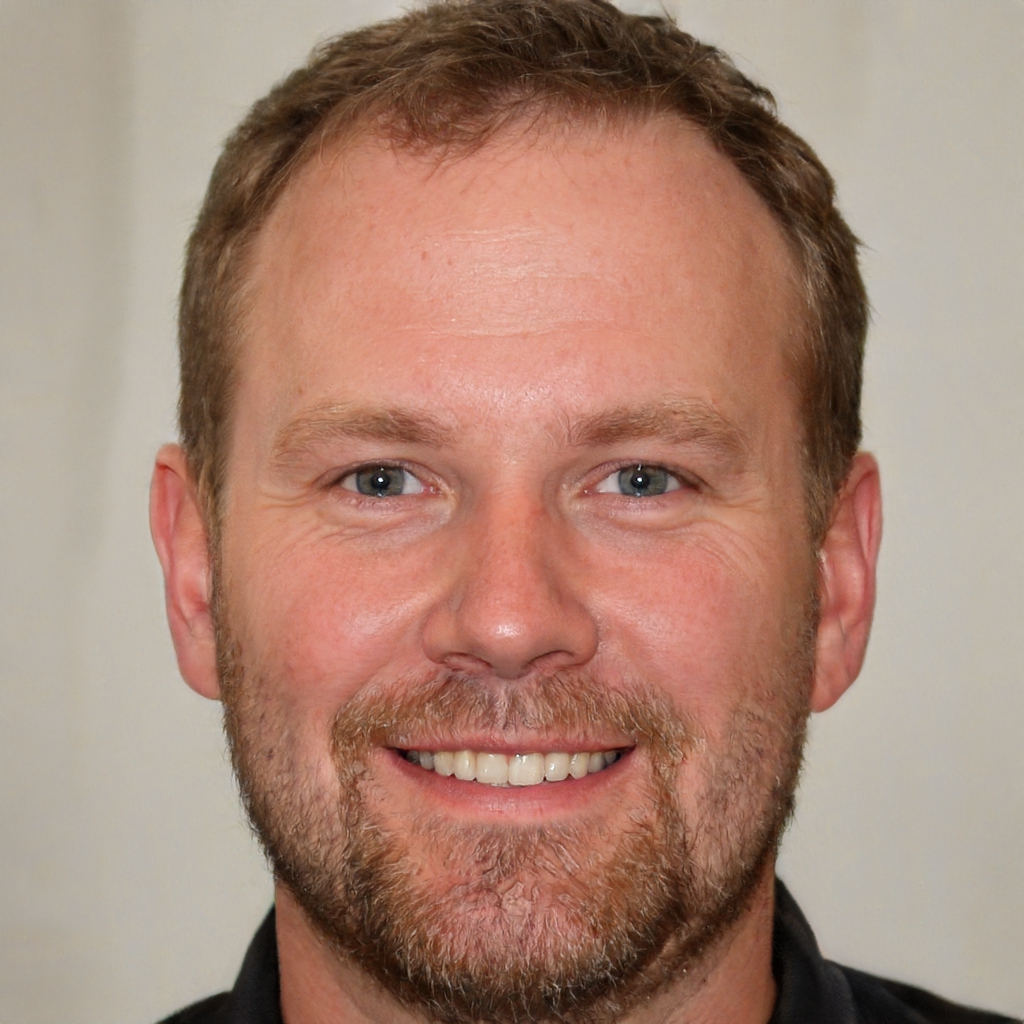
Finnish is actually 9*10+2
Yhdeksänkymmentäkaksi
Yhdeksän = nine
Kymmentä = of ten
Kaksi = two
The map is wrong, Czechs can do both 2+90 and 90+2, I am not sure if it’s regional within the country, or depends on the context, but they definitely use both versions
Even worse. 90 in old Danish is “halvfemsindstyve” but it is rarely used today. The “sinds” part is derived from “sinde” means multiplied with but it is not in use in Danish anymore. That leaves halvfems, meaning half to the five (which is not used alone anymore) and tyve meaning twenty (as it still does).
We are in current Danish shortening it to halvfems which actually just means “half to the five” in old Danish (4.5) to say 90. 92 is then “tooghalvfems” (two and half to the five, or 2+4.5). The “sindstyve” part (multiplied with 20) fell out of favour.
So we at least have some rules to the madness. Were just not following them at all anymore.
Edit: Minor old Danish math correction.
When I’m in Denmark and have to say 92 I just say “kamelåså”
Oh man, that takes me back.
Syglekole?
You just ordered a thousand litres of milk
That’s actually happened a couple of times in Denmark (accidentally and after the sketch was released) https://www.tv2.no/nyheter/utenriks/span-data-lab-colortxt-blue-classtxt-blue-idext-gen1386kamelasa/span-dansk-kjopmann-skulle-ha-270-liter-melk-fikk-2575-liter/7268663/
Sorry to ping you a bunch with replies. I’m curious now, do you have unique numeral symbols for the numbers after 9?
No, we use the same numeral symbols as everyone else. We just pronounce it in the most unintuitive manner possible.
I can imagine that we once had symbols representing the base 20 system but standardised at some point to decimal symbols. I though haven’t encountered any piece of history to back that up.
How did you guys even get to this thought process for saying this sort of thing? Why would you work in fractions for whole numbers in language to start? Is this a monarch thing like they fancied themselves a math wizard so they said it like it was a solution on countdown and others mimicked to keep them happy/sound smart themselves?
How
Why
Dane here. My guess is utter madness resulting from a history of overdosing on fly agaric filtered through the urine of slaves, followed by a distressingly long period of Catholicism.
Frankly, it’s a wonder that our ancestors didn’t come up with an even MORE bizarre way of saying numbers and other things!
Also I’m pretty sure losing folks to stupid wars in England didn’t help, the Great Heathen army and the conquest of England by Sweyn Forkbeard come to mind. No the relative prosperity and peace of Cnut the Great doesn’t make up for the theoretical brain drain.
The reason is that the Danish numbering system is based on a vigesimal (base-20) system instead of the decimal system. Why is a good question but it might have been influenced by French during a time where numbers from 50-100 is less frequently used, making them prone to complexity. The fractions simply occur since you need at least one half of twenty (10) to make the change from e.g 50 to 60 in a 20-based system.
But how did Danish end up like that even though it’s quite similar to Germanic languages and obviously neighbouring Germany?
No idea. We probably had a period where we traded a lot with the French and got influenced by the vigesimal system that way, creating the abomination of a Frankenstein monster we have today.
English also has words like dozen (12) and score (20).
I guess it came from the physical counting in trading. Imagine counting 96 small items. It makes sense to group them into scores and then count the scores. 1 score 2 score 3 score 4 score and a half score. Then there are few remaining that didn’t fit it neatly in scores and then counted last. That’s a total of 1, 2, 3, 4, 5, 6 plus the 4 and a half scores.
why would you avoid the fraction and use it up to 100 then minus 8. I dont have a lot of an issue with it being base 20 but the idea that talking in numbers you have to know fractions for a child is WILD to me. You have to do like a month of understanding math fractions to get how to speak whole numbers.
We don’t really learn the reason, we just memorise the word for the number. Kinda like you know the word “dog” means a four legged cute creature, but not why the name is “dog”. The old rules are not something we are teached, I just got curious after a confused foreigner made me think about the system for a second :p
ancient danes counted with their toes too lmao
That’s the technical reason, another reason is that the Danes tried to out-French the French, as they were very hip at the time.
Little fun-fact: We still have a trace of this left in Norwegian, where the most common way to say “1.5” is not “en og en halv” (“one and a half”) but “halvannen” which roughly translates to “half second”.
We abandoned the “half third”, “half fourth” etc. very long ago (if we ever used them), but “halvannen” just rolls nicely off the tongue.
We actually still say “halvanden” in Danish too. Everything else is not used (except for halvfems which means 90…)
You also use halv tres (50) and halv firs (70) don’t you?
Halvfjerds for 70 but yes. Firs is 80 though, so that doesn’t make in much easier.
Fjerde = fourth, fire = four. That makes “half to the fourth” become “halv til fjerde” or “halvfjerds” while “four times twenty” becomes “firsindstyve” and shortened to new Danish “firs”
In polish, “półtora” means one and a half, it comes from a proto-Slavic word meaning “half-second” for some reason
Halvannan is used in Sweden too. In retirement homes…
(5-0,5)x20 = 4,5x20 = 90? 2+((5-0,5)x20) = 2+(4,5x20) = 2 + 90 = 92?
- Half to the five = (5-0.5) = 4.5
- “Sindstyve” = multiplied by 20
- 4.5*20
- Two and half to the five multiplied by twenty = 2+(5-0.5)*20 = 2+4.5*20 = 2+90 = 92
Oh! That makes my brain hurt a bit less. It’s “subtract half from five”.
Yeah, it’s kinda the difference between saying “the clock is currently half past twelve” (the English way) and “the clock is currently half to one” (which we say in Danish and probably in a wealth of non-English languages too).
This is making my brain hurt. I need to try reading a few more times but, if I am understanding it correctly, the old Danish way of saying it is mathematically incorrect?
Half-to-five == 2.5
2.5*20 == 50
…
Did I read that correctly?
I’m not Danish, but I think he meant 4.5 instead of 2.5. It’s like halfway from 4 to 5, not from 0 to 5.
A similar word exists in Finnish too, when going from 1 to 2: “puolitoista” translates to “half second”, like halfway to the second number, and is commonly used to refer to 1.5, BUT without any multiplication shenanigans.
Correct.
- Half to the second (halvanden, still in use today) = 1.5
- Half to the third (halvtredje) = 2.5
- Half to the fourth (halvfjerde) = 3.5
- Half to the fifth (halvfemte) = 4.5
And so on. You might notice that I sometimes write it like “halvfemte” and other times “halvfems”. The latter is just the way it was spelled when used in a combined word (another fun quirk in Danish that we inherited from Germanic this time!). 90 is today spelled just “halvfems”.
I think it means half less than 5, or 4.5
Maybe you’d say “half until 5” in english
for no particular reason, in English, 5:30 can be said as “half past 5” but never “half until 6”. (but “five thirty” is still more common)
I love how halvfems exists but fems doesn’t (and I guess it never did)
Fun fact, english used to count the same way as german, and it still has the numbers in “reverse” from 13 to 19.
Eleven and twelve kinda are as well. They literally mean “one left” (ain-lif) and “two left” (twa-lif) with the “over ten” being implied.
I’m 43 years old and this is the first time I’ve seen an explanation of these numbers. Thank you!
German’s my first language and I am kinda proficient in english but I never realized that the english numbers 13 to 19 work like like ours…
French is pretty stupid too. Smart Belgium with french as national tongue only changed that number aberration: They use the made-up word “octante” for eighty and “nonante” for ninety, instead of “quatre-ving” (four-twenty) or “quatre vingt dix” (four-twenty , ten) in proper french
What if I told you that all words are made up?
In Belgium we use nonante, not octante, that is, iirc only used in Switzerland. That means we at least don’t use quatre-vingt onze etc.
Dunno, I prefer french to spanish tbh. Maybe its because basque is like French.
That meme is so lame. 92 in Danish is two and a half fives. The 20 part is old-fashioned and literally nobody has used that since the 1800s.
2 and a half fives’ twentieth = outdated cringe. 2 and a half fives = actually how it is said today.
It’s still a friggin nightmare to get someone’s Phone number verbally, though.
Not Danish here… Isn’t that 12.5?
It’s breaking my brain too, what is this cryptography lmao
When you have to write down numbers, but the person reading you the numbers speaks slowly 💀
Them: “Two…”
Me: “2”
Them: “… and fifty”
Me: “…
2- 52”Them: “Six…”
Me: “6”
Them: “… and twenty.”
Me: “
6- 26”🫠
No, in Danish the “half five” part means the same as “half past 4” on the clock: 4.5.
Then the part that most people omit nowadays, sindstyvende, means times 20.
(Half past 4) times 20 = 90.
That only makes it worse.
Two and a half fives = 12.5.
More like 2 and half fives. Half five is our word for 90. So in essence we say 2 and 90 but the word 90 is half five.
80 is fours
70 is half fours
60 is threes
50 is half threes
40 is forty
30 is thirty
20 is twenty
10 is ten.
Oh and a 100 is a hundred. So I dunno what happened between 50 and 90, but I’m sure there is a funny story behind that somewhere.
You’re just digging yourself and Denmark into deeper hole. It’s fucked up and you know it
I never claimed otherwise. I’m just tired that this 92 meme is using outdated language (or numbers rather) to make a point that may have been reasonable to make in the 1800s, but not today. Doesn’t mean our number system is any less retarded today. If anything, I’m just adding on to the fact that Danes are notoriously lazy with the Danish language and will cut corners with all words and sentences the same way Americans cut corners when they chop everybody’s name up into bite sized nicknames. For us, though, it’s more like slurring at the end of a word and flat out ignoring letters that are very clearly there in the word.
Woe is the poor asshole who decides to immigrate here and attempts to learn the cancerous gargle that is our language.
That said, it is still the best language to curse in and when used in poetry, it can be downright majestic.
But yeah, our curses are superior to all words in the English language.
My favourite for life will always be kræftedme = cancer eat me - usually uttered in a sentence to underline how pissed off you are and how serious you are about being pissed off.
My favourite for life will always be kræftedme = cancer eat me - usually uttered in a sentence to underline how pissed off you are and how serious you are about being pissed off.
Just curious: do you take that as a reference to cancer as a sickness or actual crabs eating you?
In German the word for cancer (Krebs) is a homonym referring to both the sickness and a crustacean. So I wondered how this works in Danish.
(It is in English too, though the reference to crabs is only scientific and thus a very exotic interpretation)
In Danish cancer is “kræft” while crab is “krabbe” so kræftedme refers to getting eaten by the sickness. Could potentially also refer to strength as kræft/kraft also refer to physical strength, but I’m pretty sure it refers to the sickness.
Dane here. No one actively thinks of 90 (halvfems, 2 and a half fives) as a mathematical expression. Is is just a word for 90. So we say 2+90 like Germany.
Would it have been nice if that word meant “9 tens”, yes, but Danish is a just a stupid language where you have to learn a bunch of things by heart unfortunately.
How would you say trump is like Hitler? Do you have to describe the Holocaust in few words within a long ass German style word?
Easy. We often use idioms for comparisons.
One old way would be: “Trump and Hitler are both 2/3 yards from one piece” which means “They’re cut from the same (bad) fabric”.
Fabric was cut in an old measurement"alen" which was 2 foot or 2/3 yards, so simply stating the length would be understood as fabric, similar to how everyone knows that a 2x4s is a piece of wood and such.
Denmark = outdated cringe
Just kidding neighbor, I love you all
Found the swede xD ❤️
Let’s grab a rød pølse and some surströmming
edit: evil combo of the year
I’ll bring the kamelåså and we get the party started
Exactly
Base 20, or “vigesimal”.
Norway used to count like the Germans, but switched after the introduction of the telephone. There were simply too many mistakes when telling the numbers to the operators, that a change was mandated.
Old people might still use the 2+90 variant though, but it is not very common.
So now you’re calling me old? THE NERVE!
French language uses math to speak numbers if anyone is wondering about France.
Edit: Apparently I wasn’t precise enough for the dude below. It starts at 70 and ends at 99 every time you get to those numbers. De rien, tabarnak.
Not quite. They just have remnants of an old base 20 system that kicks in for specific numbers.
Je le sais, je parle français .-.
shakes fist THE DANES!
Four and twenty blackbirds baked in a pie…
That still fits the pattern of “bigger number, then smaller number.”
True. It does match the French pattern of 4x20+x.
It does exactly, and I didn’t notice that. “Four score and twelve.”
And the French way isn’t rotten? Lmao
It’s bad, but not danish bad
I’m actually impressed by this map. The French speaking part of Switzerland is not only differentiated from the German speaking part, it is also differently coloured than France, since Swiss French has more sensible numbers.
Is this a Michael Hobbes joke?
We can also do 2+90 here in the UK. There’s a nursery rhyme about “four and twenty blackbirds” that I think the kids are still learning.
Isn’t it mostly 9*10+2? 9 * ty (implying 10) + 2.
Even german does that, although weirdly the way you can’t just write down long numbers reasily one by one: Zwei (2) und ((and) neun- (9) -zig (*10)).